Columbia Type B cylinder phonograph
Also: Eagle graphophone
Contextual Associations
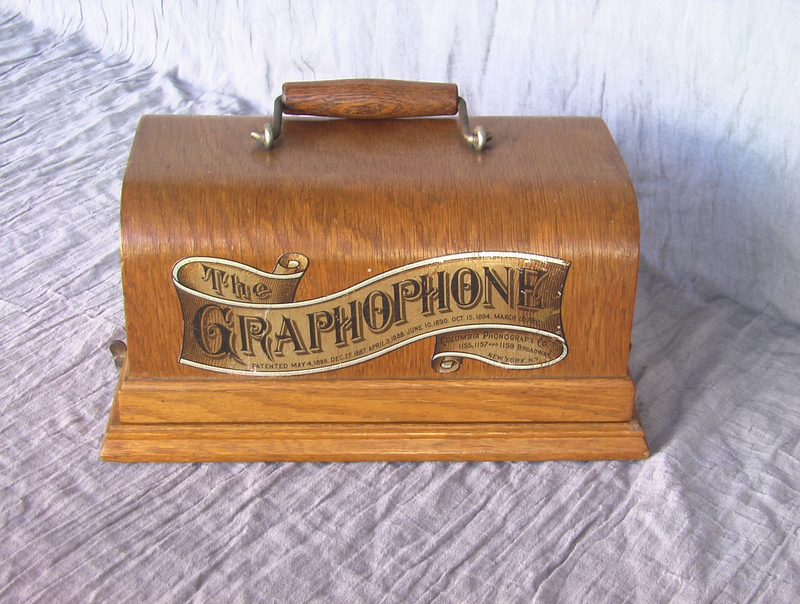
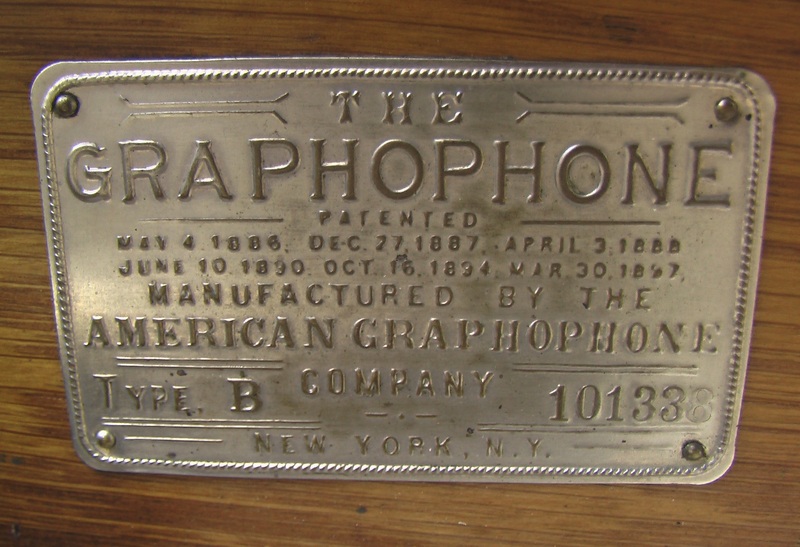
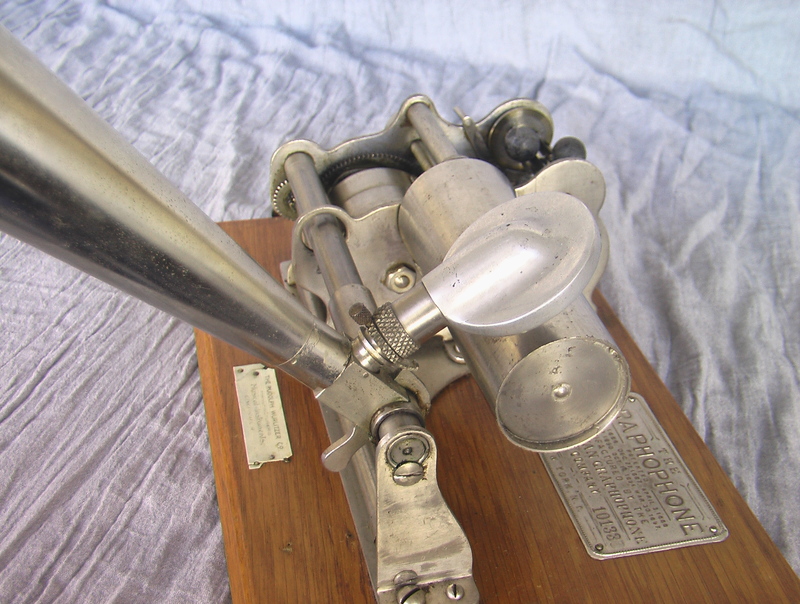
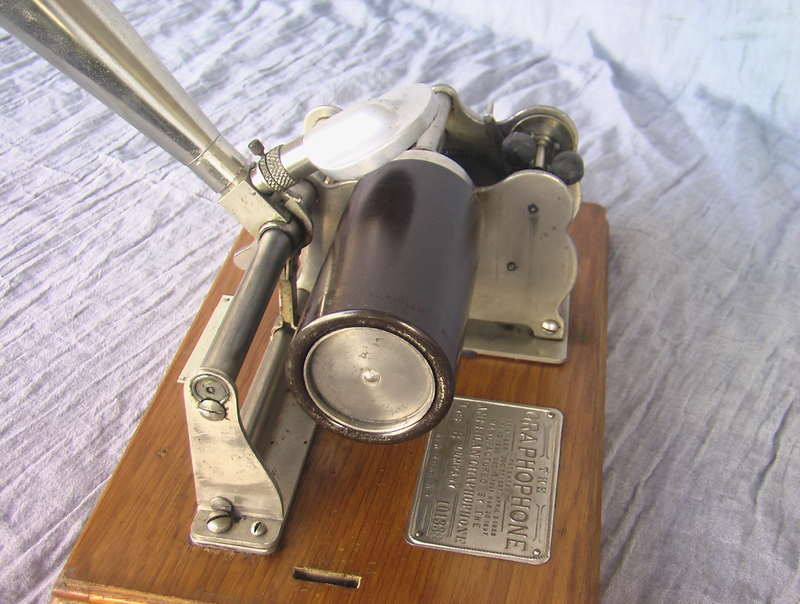
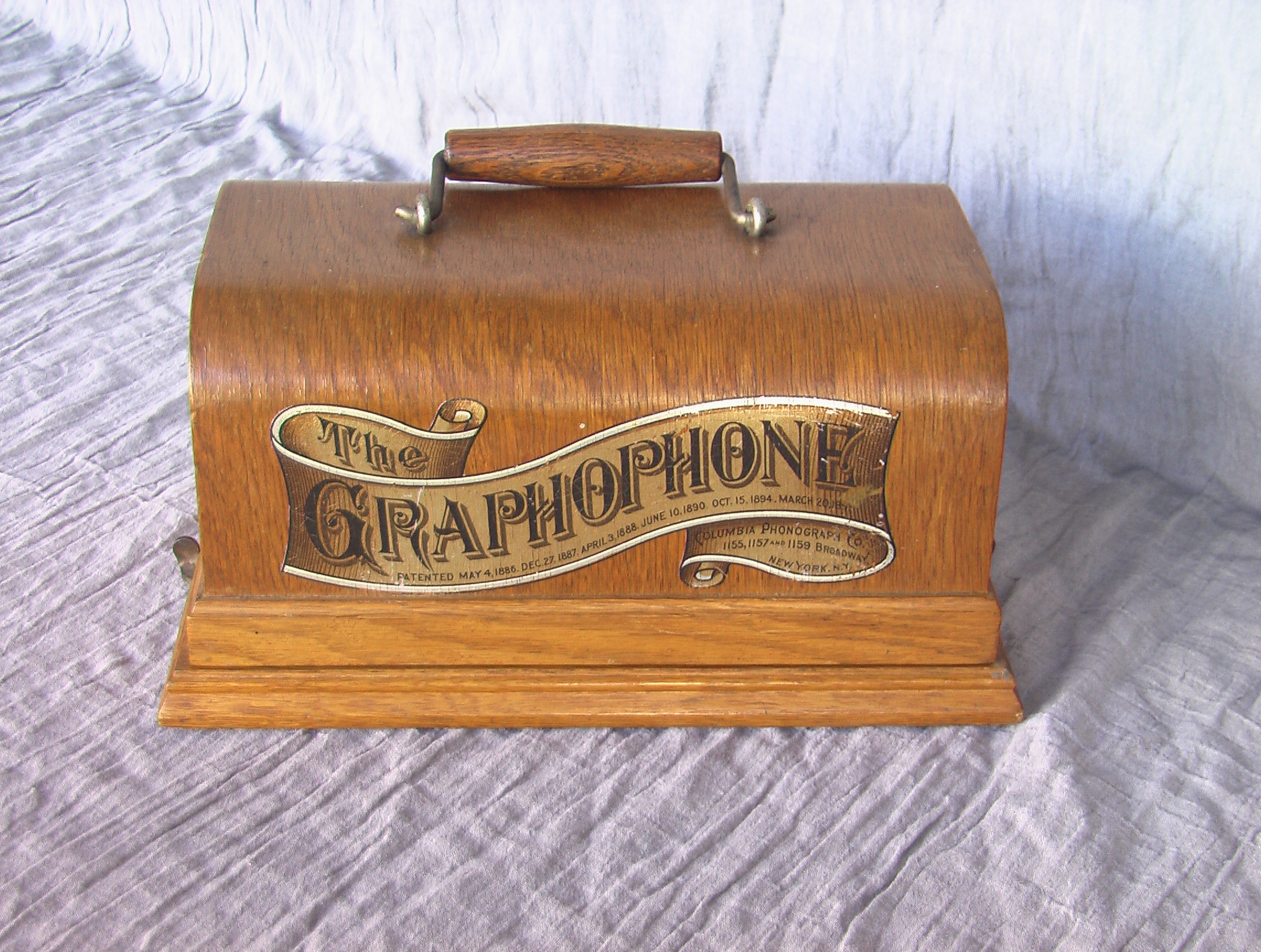
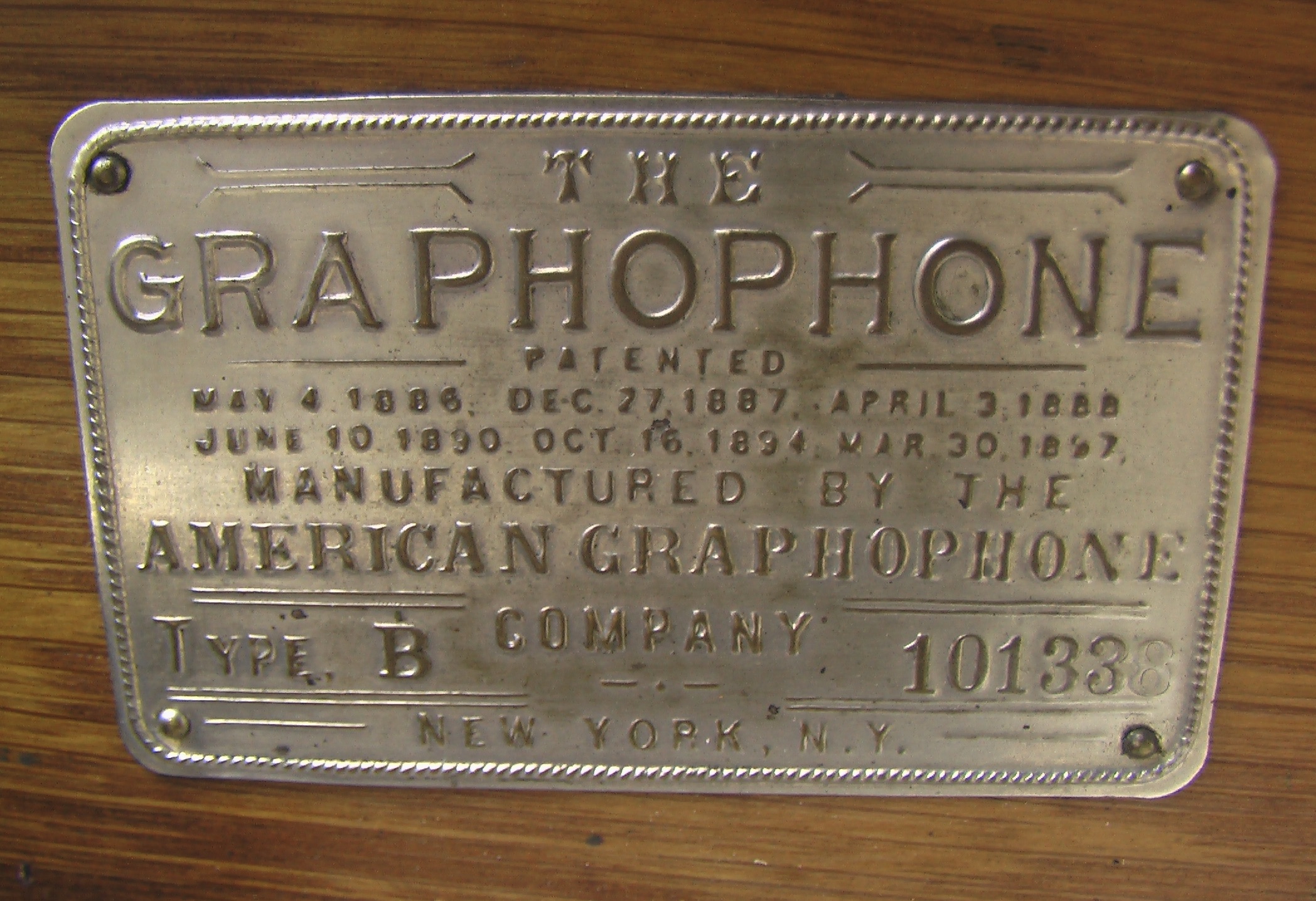
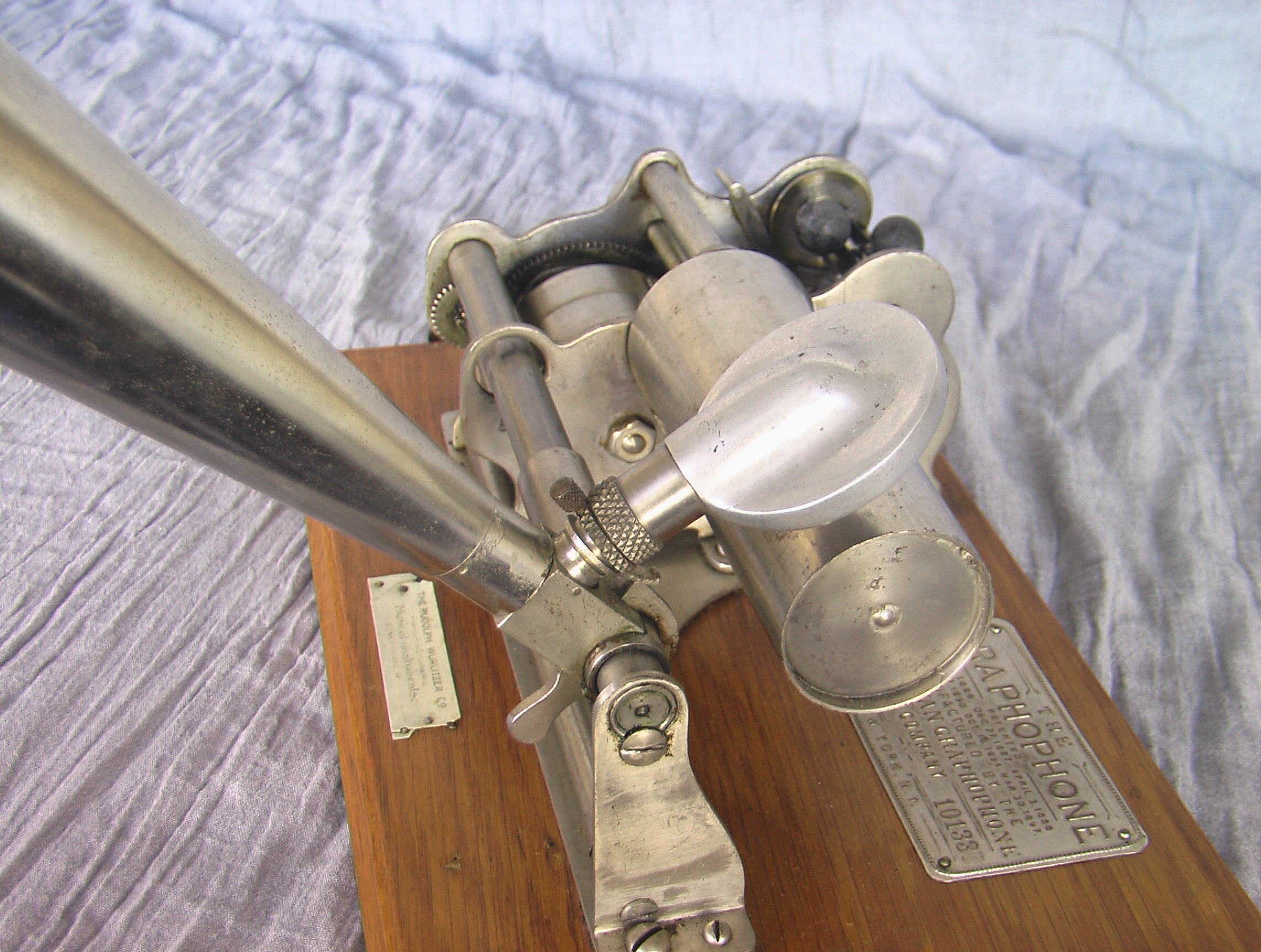
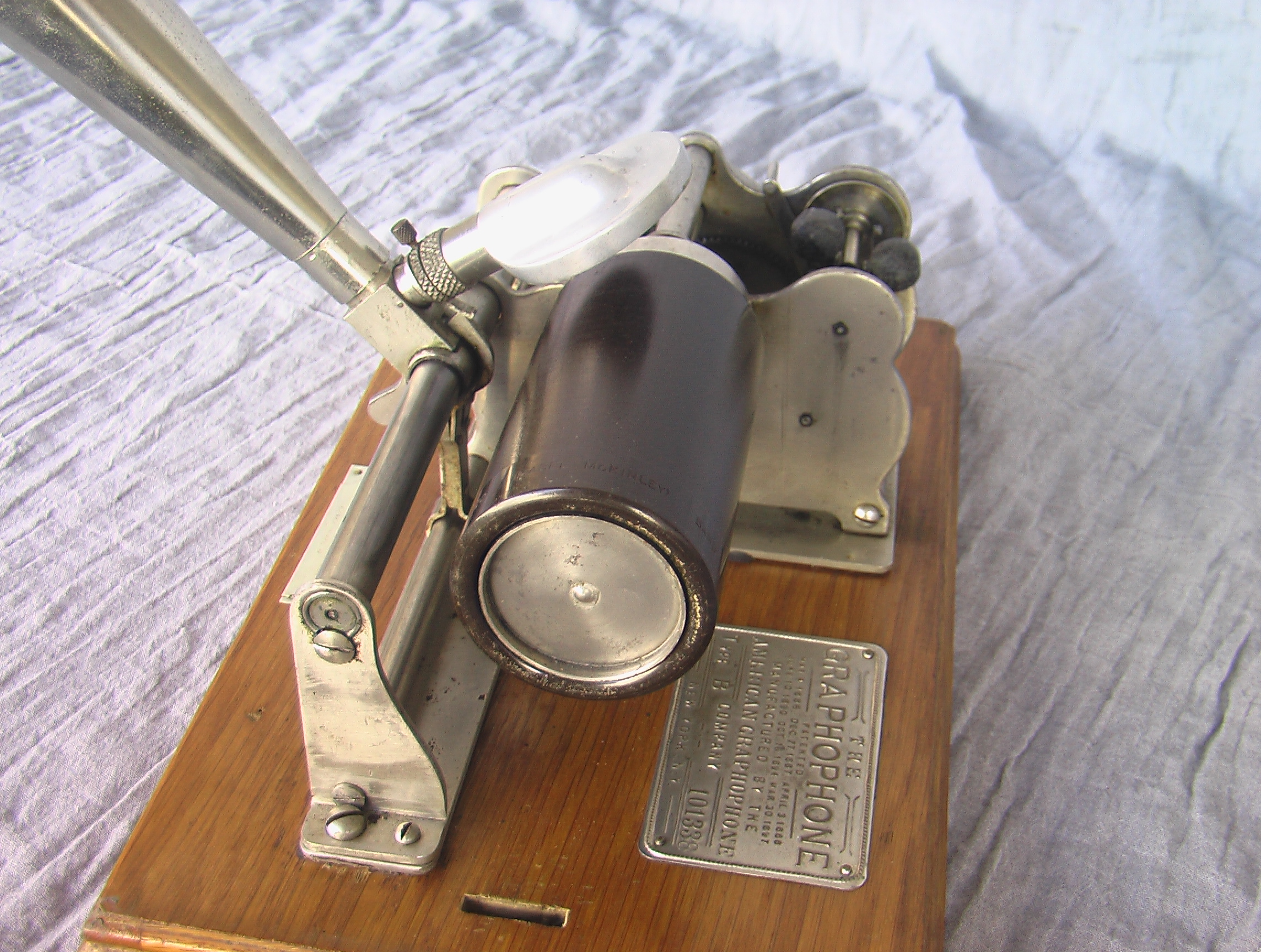
This Columbia Type B (commonly referred to as the “Eagle”) cylinder phonograph is a totally mechanical (non-electrical) acoustic stylusphone idiophone designed and made in the U.S.A between 1897 and 1906 but also introduced to Europe and elsewhere in the world. Its popular name derives from a U.S. gold coin of the late 19th and early 20th centuries worth ten dollars, the purchase price of this machine (minus a cover). At the time, this price tag put acquisition of the “Eagle” withing reach of a much larger segment of the U.S. population than previous and contemporary commercially available cylinder players. Along with contemporary material science advances in hardened-wax cylinders (which could be played many times with decent audio quality), many more individuals around the world could welcome into their homes an affordable representative of the still relatively new and fast-evolving world of sound capture. Cylinders of two-minute duration were used during the brief lifetime of the “Eagle.” Columbia’s trade name for its external horn cylinder phonographs was “Graphophone,” as the decal on this phonograph’s casing boldly displays (gallery #2). The machine’s serial number (101338, see detail #1) suggests it was probably made and marketed around 1900. This phonograph can be seen and heard in action in the above video.
Description
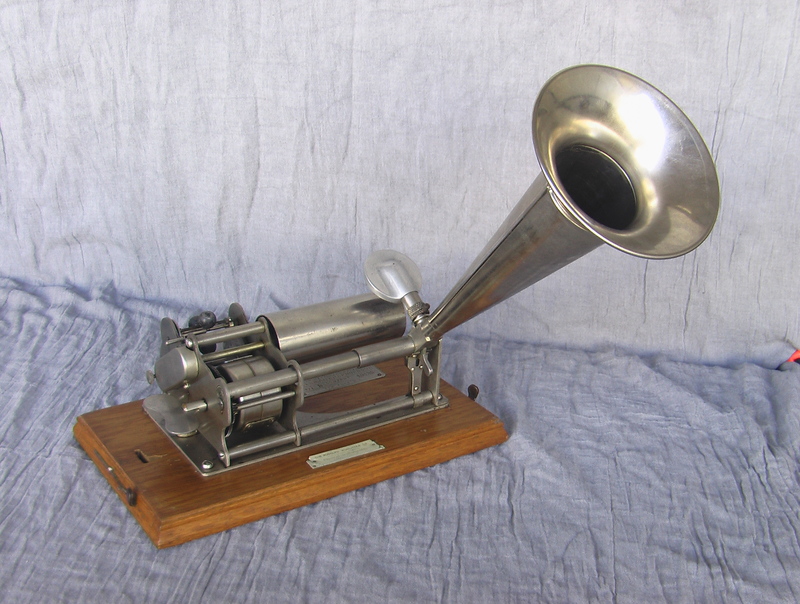
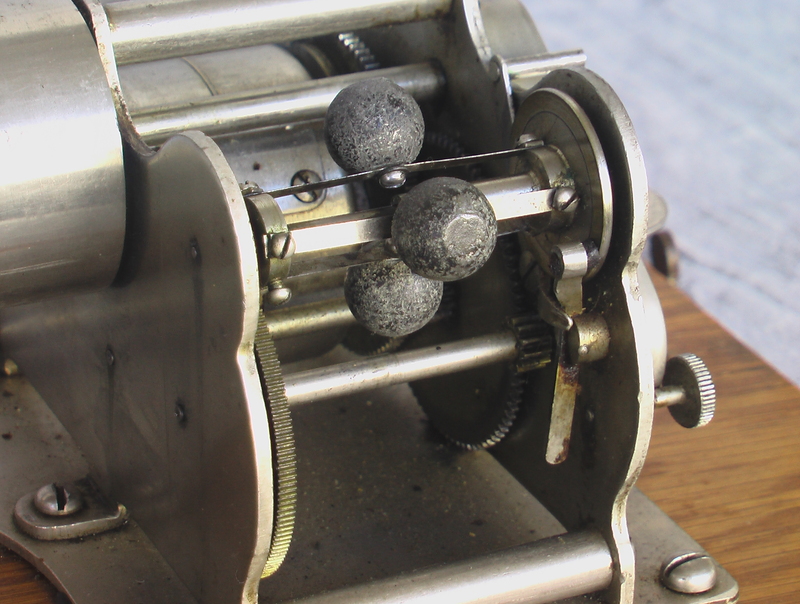
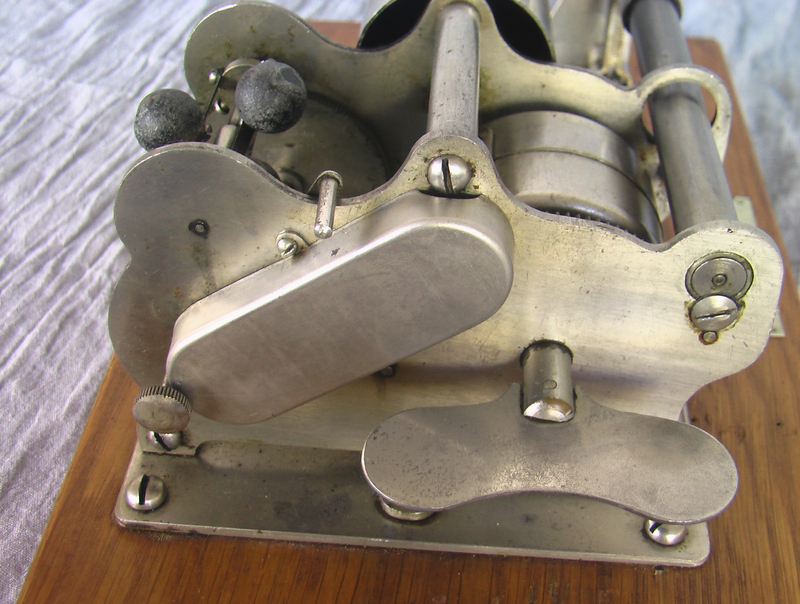
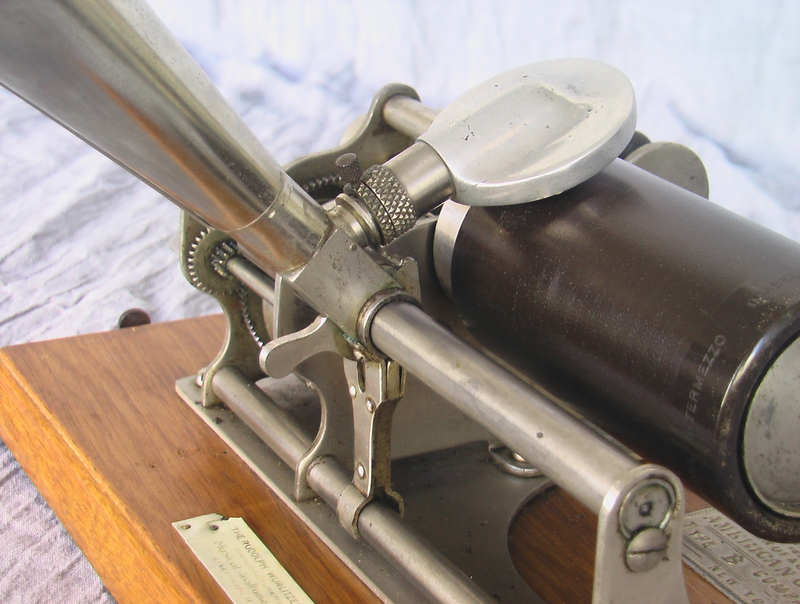
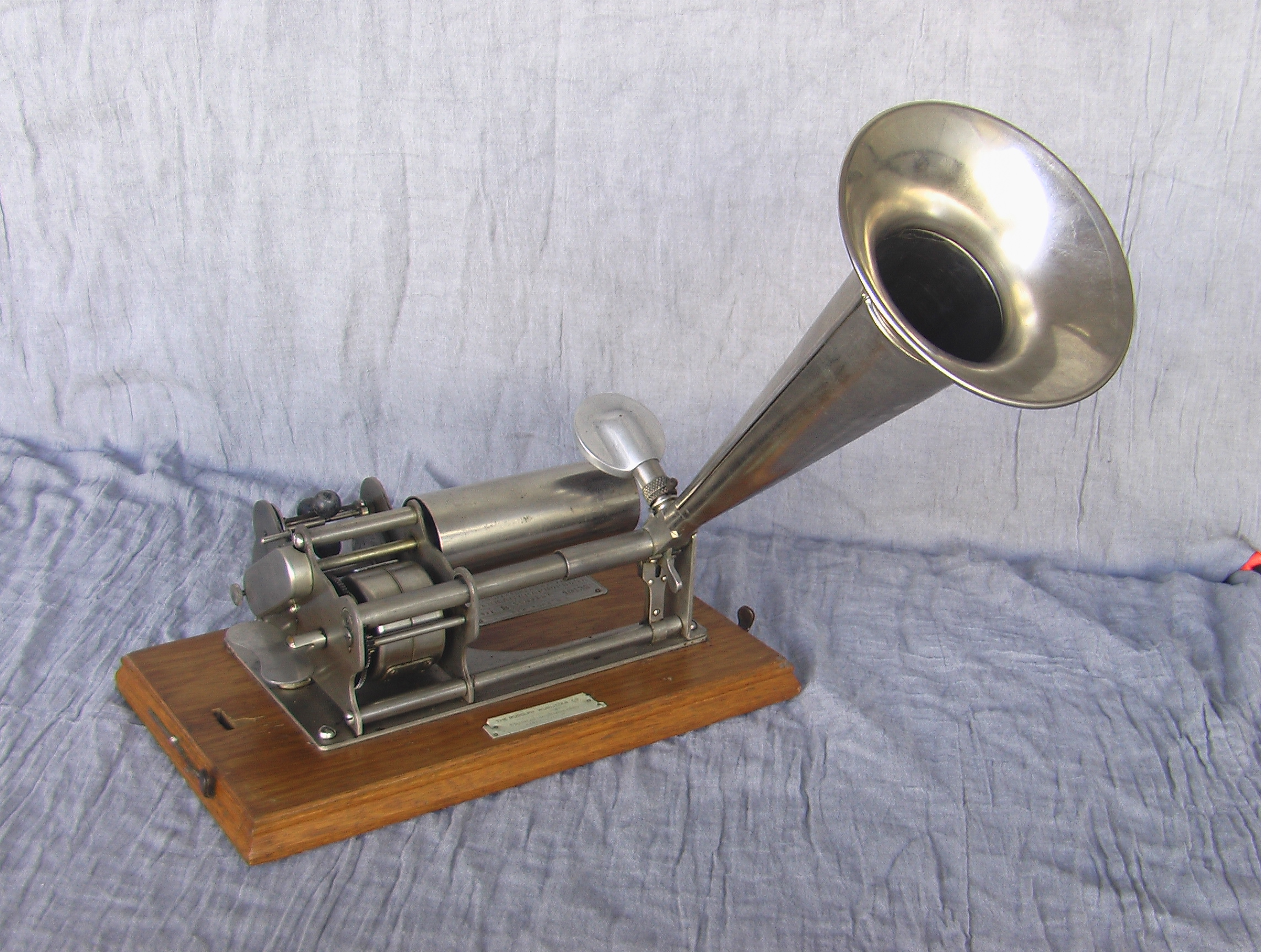
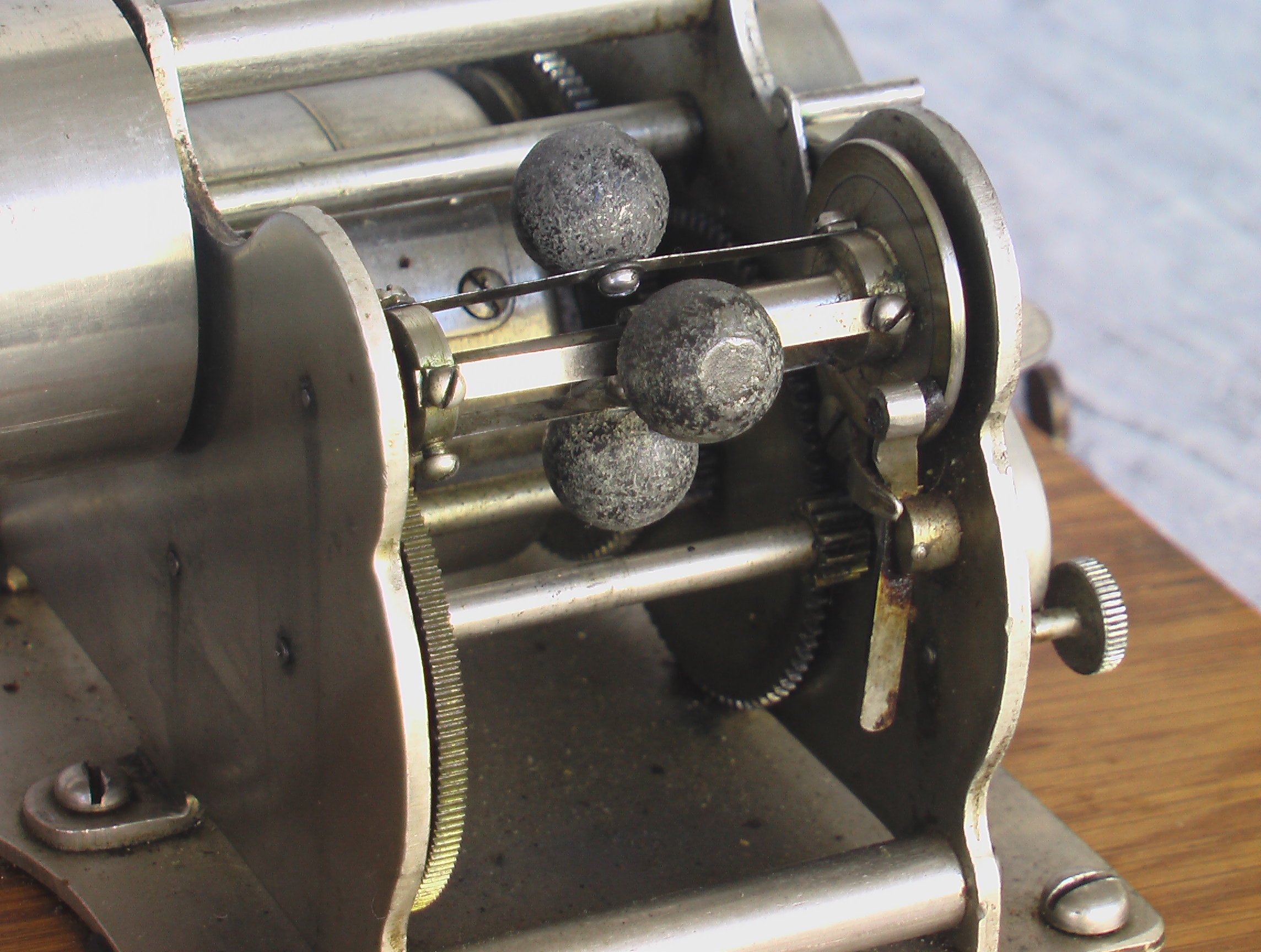
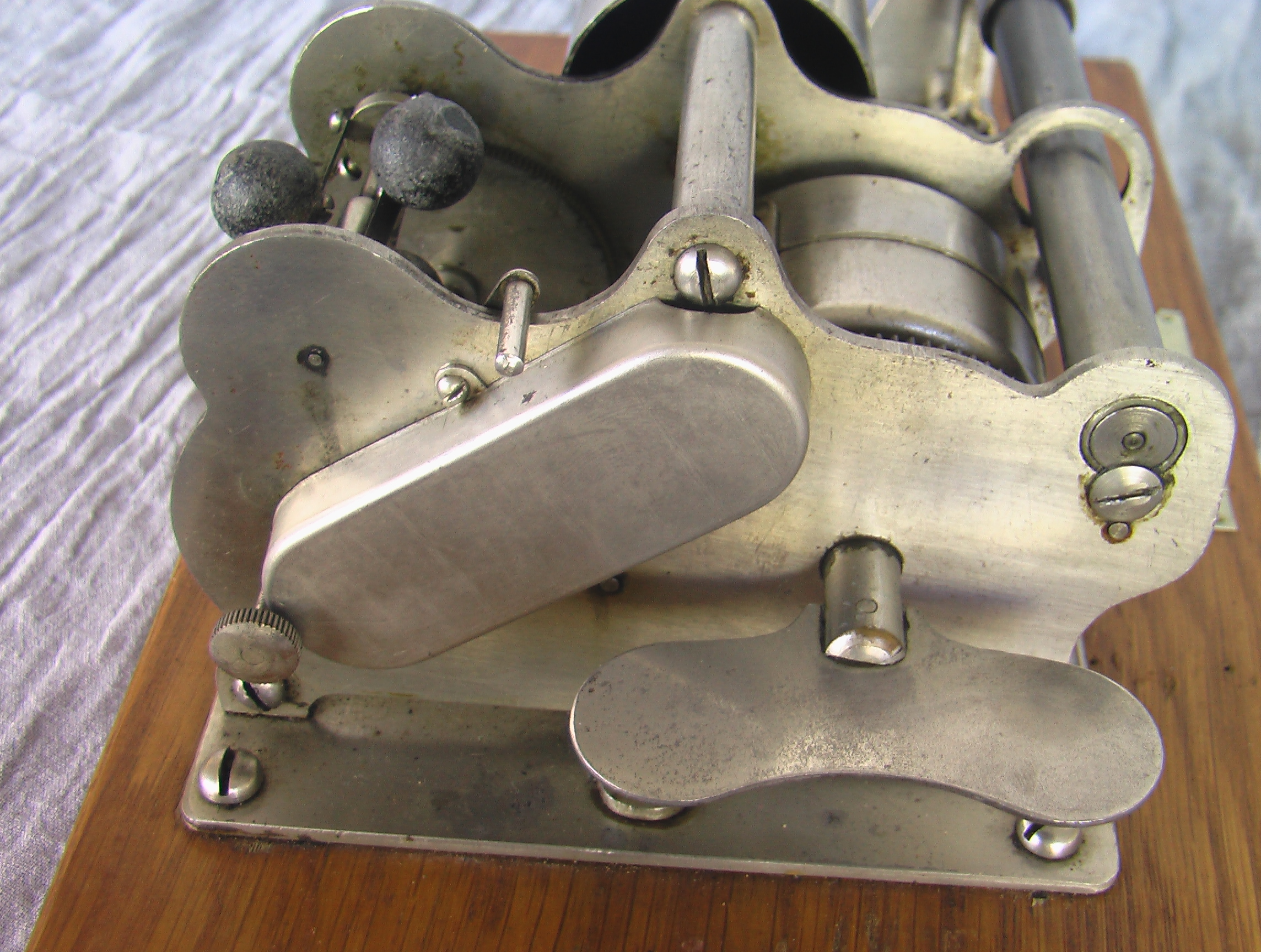
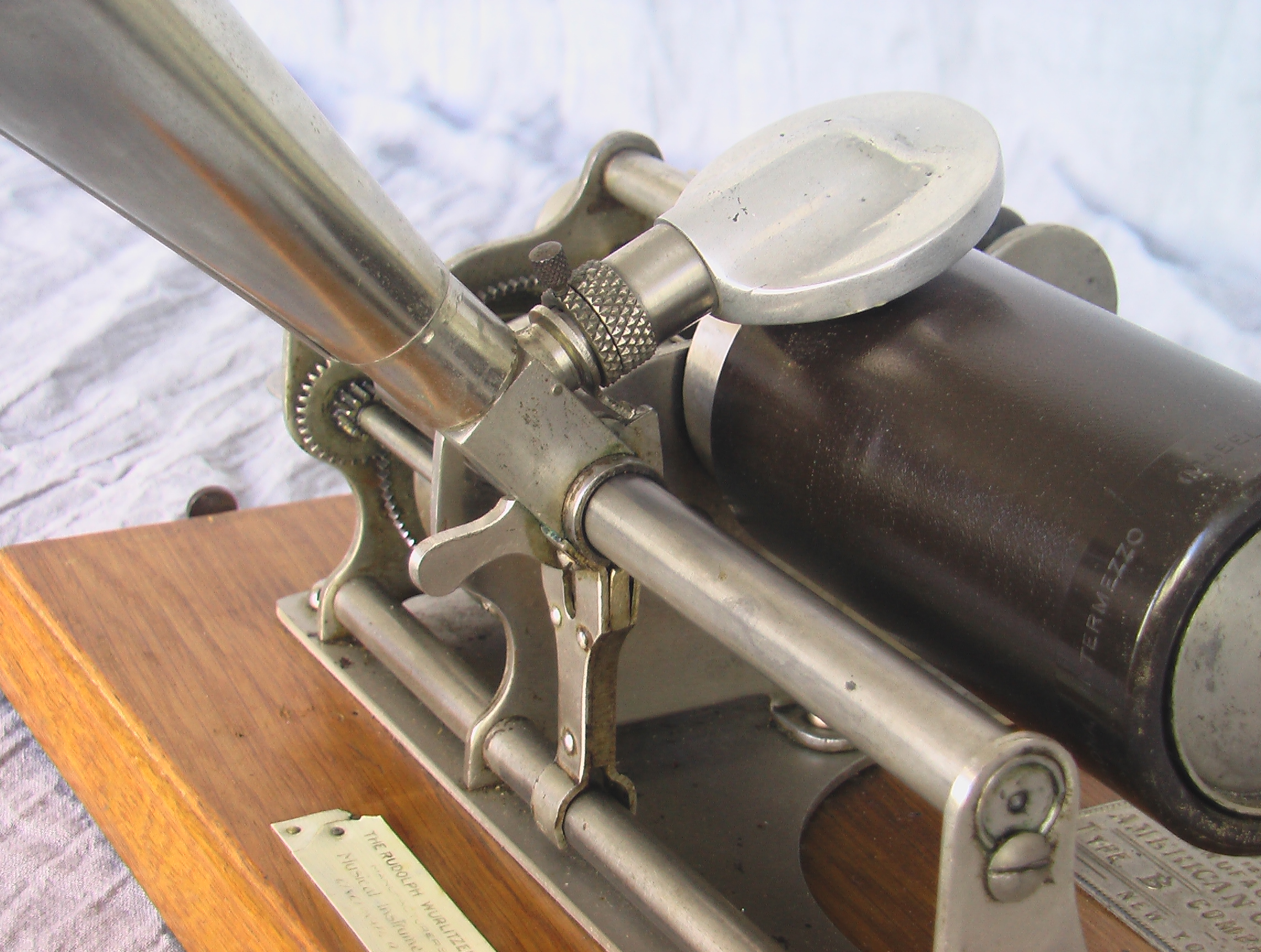
The “Eagle” is totally mechanical, and all its workings are on open display because they rest upon a wooden base (gallery #1). At its heart is a key-wound spring motor, its spring enclosed in a metal casing or barrel. The energy output of the spring is managed by a governor consisting of three metal balls each attached to a strip of spring steel (detail #2). An enclosed belt and open gearing (detail #3) passes this steady energy output of the motor to two other components of the machine: 1) a slightly tapered metal mandrel over which a cylinder is placed; and 2) a feed screw (shielded from view) that runs parallel to the mandrel and beneath it and against which one end of the sound-box housing contacts. This gearing ensures that the sound box (or reproducer), which houses the glass-tipped stylus, will slide left-to-right along its guide rod the length of a rotating cylinder in coordination with the standard speed (160rpm) and groove width (100-per-inch) for two-minute cylinders. The phonograph’s hollow round soundbox (detail #4) houses the stylus, which is mechanically linked to the center of a small membrane of unknown material (possibly mica) mounted inside the soundbox and which serves as the machine’s speaker. This speaker’s output is directed through a removeable cone-shaped horn (gallery #1; the horn pictured here is s period-accurate replica), one end of which fits over an open circular base that protrudes from the soundbox (detail #4). When not in use, the horn is removed and the arched-wooden cover fits over the phonograph’s mechanics and is secured with two metal flanges, one at each end of the machine’s wooden base (gallery #2).
Player - Instrument Interface and Sound Production
The player takes a two-minute cylinder and slides it onto the phonograph’s mandrel while the sound box carriage (including its attached horn) is at its raised position and so that the starting point of the phonogram’s groove is situated near the phonograph’s motor (detail #5). The player then uses the motor’s key to fully wind up the enclosed spring while the machine’s on-off switch is in the off position. When ready to play the chosen phonogram, the operator slides the main switch to the ‘on’ position and the governor, gearing, mandrel, and sound box feed screw all start rotating. The operator then slides the soundbox carriage to over the left end of the cylinder and lowers the soundbox until one end of it contacts the drive screw and the stylus end comes in contact with the surface of the rotating cylinder (detail #6). The soundbox and stylus then start to move along the length of the cylinder at a consistent pace (covering 100 passes through the groove spiral per inch of cylinder while rotating at 160 times per minute). When the performance captured on the cylinder comes to an end, the player lifts the stylus and soundbox off the cylinder, slides it all the way to the left, and turns the motor off before removing the cylinder from the mandrel.
Origins/History/Evolution
The cylinder phonograph was invented in 1877 by Thomas Edison. His machine was driven by a hand crank and used a cylinder made of tin foil. By 1897, when the “Eagle” was first designed and marketed by Columbia, a number of technological advances had accrued both in the material science of cylinder phonograms and the mechanical design of phonographs to allow the nascent recording industry, and actors in it such as Columbia, to produce a marketable machine for the masses. Although the market lifetime of the “Eagle” was less than ten years (production of all Columbia cylinder phonographs ceased in 1906), that several of them have survived for well over a century with perhaps no more than one overhaul (as was the case with the Type B in this collection), is a testament to the quality of the machine’s design and physical durability.
Bibliographic Citations
Reiss, Eric L. 2003. The Compleat Talking Machine. 4th ed. Chandler, AZ: Sonoran Publishing, LLC.
Instrument Information
Origins
Continent: Americas
Region: North America
Nation: U.S.A.
Formation: Euro-American
Classification (Sachs-Von Hornbostel revised by MIMO)
112.521.1
Design and Playing Features
Category: idiophone
Energy input motion by performer: none
Basic form of sonorous object/s for idiophone: needle/stylus
Sound objects per instrument: one
Resonator design: separate horn-shaped resonating space - temporarily affixed to exterior of instrument when played
Number of players: one
Sounding principle: flexing - indirect
Sound exciting agent: contours on the bottom of a phonogram groove
Energy input motion by performer: none
Pitch of sound produced: definite
Sound modification: none
Dimensions
12 in. width of base
7.5 in. depth of base
6 in. height of case (with cover)
14 in. height of phonograph (with horn)
10.8 in. length of horn
5.4 in. diameter of horn bell
0.7 in. diameter at reproducer end
Primary Materials
metal
spring steel
wood
Maker
American Graphophone Company (Columbia)
Model
1897; Type B
SN: 101338
Entry Author
Roger Vetter