Contextual Associations
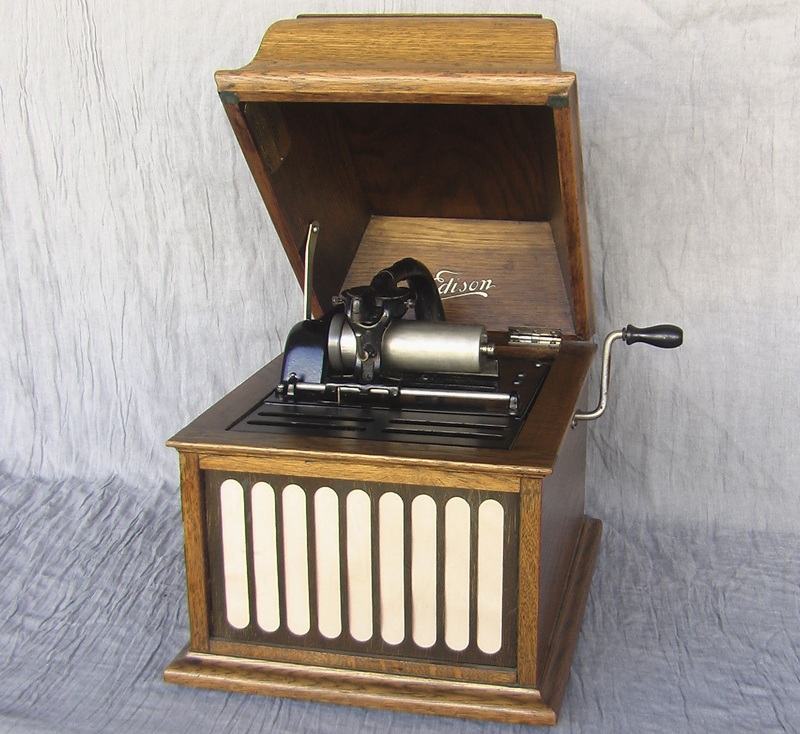
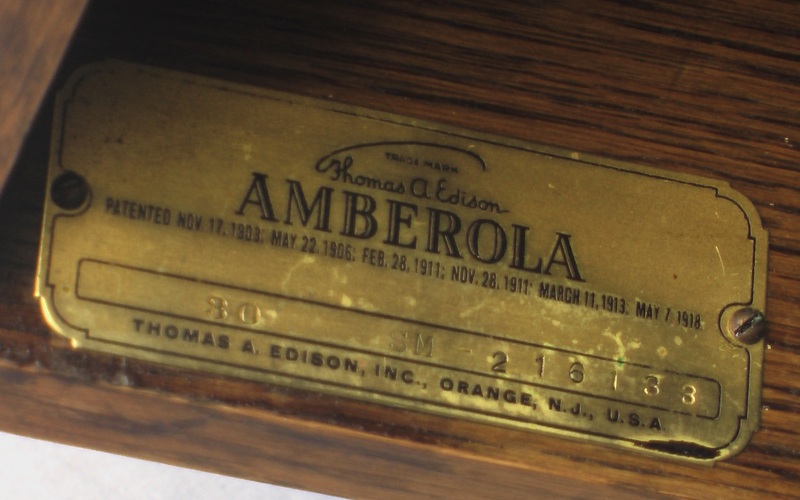
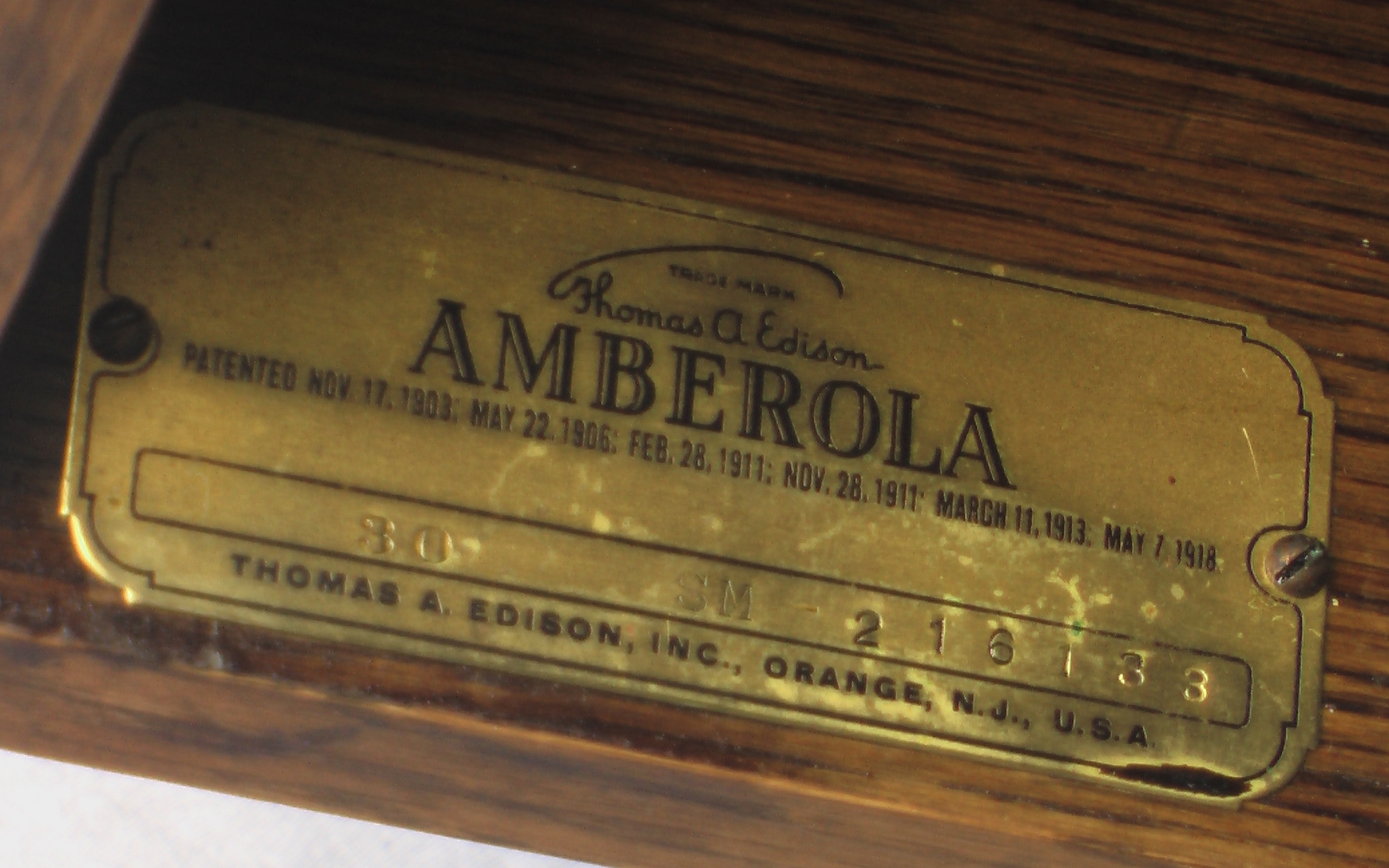
This Edison Amberola 30 cylinder phonograph is a totally mechanical (non-electrical) acoustic stylusphone idiophone designed and made in the U.S.A between 1915 and 1929 but also introduced to Europe and elsewhere in the world. From the copyright information found on the ID plate of this instrument (detail #1), it was possibly manufactured in the 1920s. The Amberola 30 was the least expensive of four new Amberola models marketed by Edison starting in the mid-1910s. The “30” refers to its cost--$30—in 1915. By the time the Amberola series of phonographs were introduced, recording companies, including Edison, were releasing only 4-minute cylinders. Therefore, only 4-minute cylinders can be played on this machine; it does not possess the flexibility to play both 2- and 4-minute cylinders like the Standard Model D phonograph found in this collection once did. This phonograph can be seen and heard in action in the above video.
Description
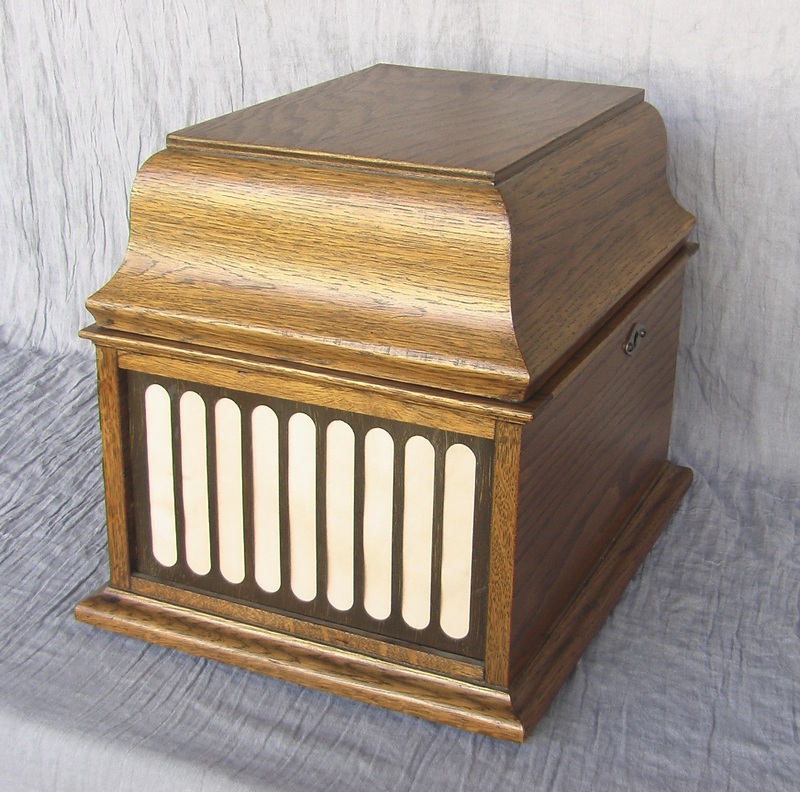
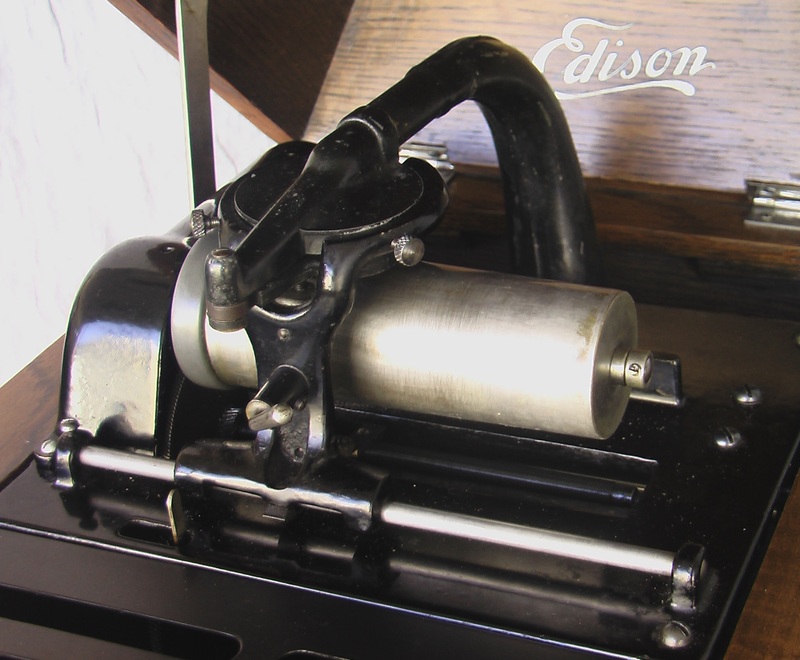
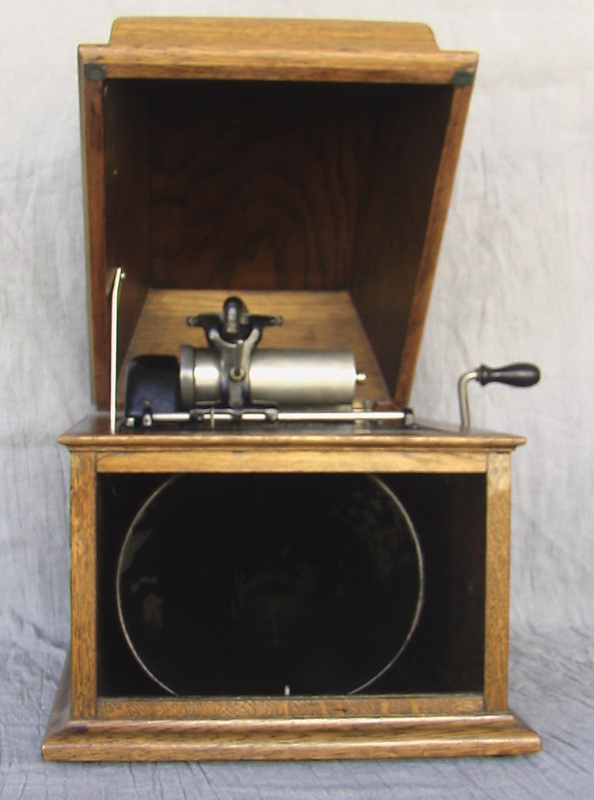
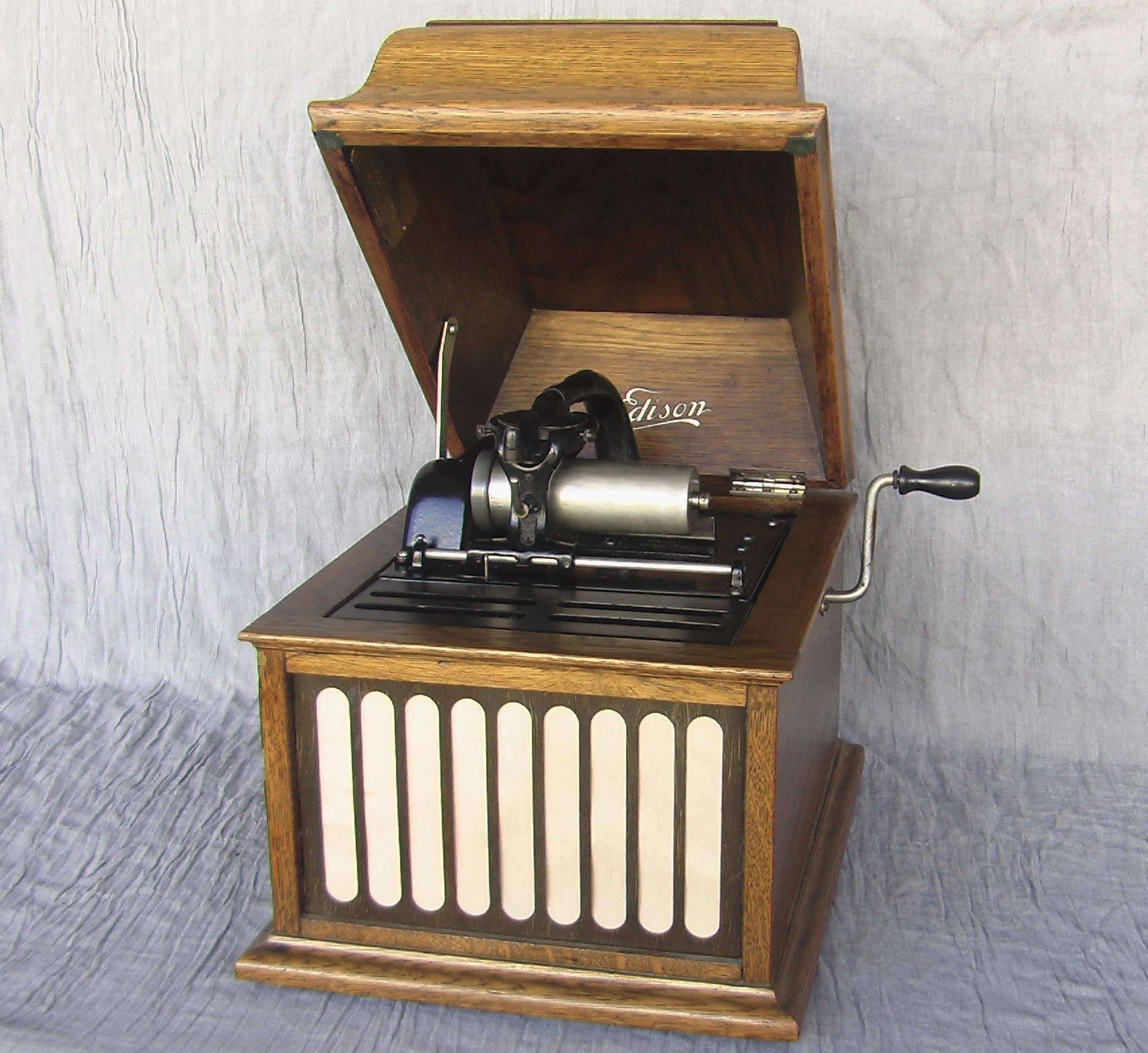
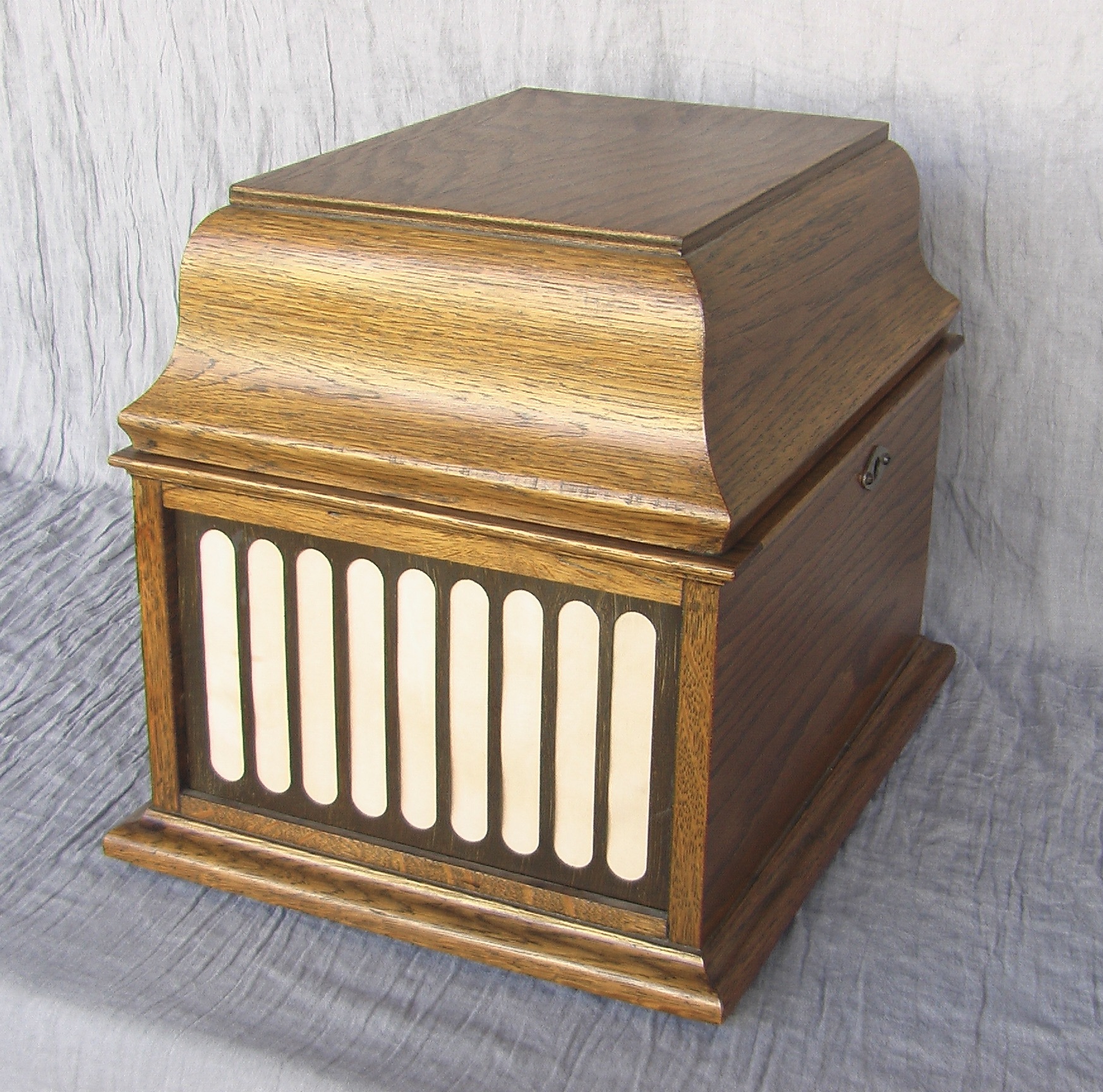
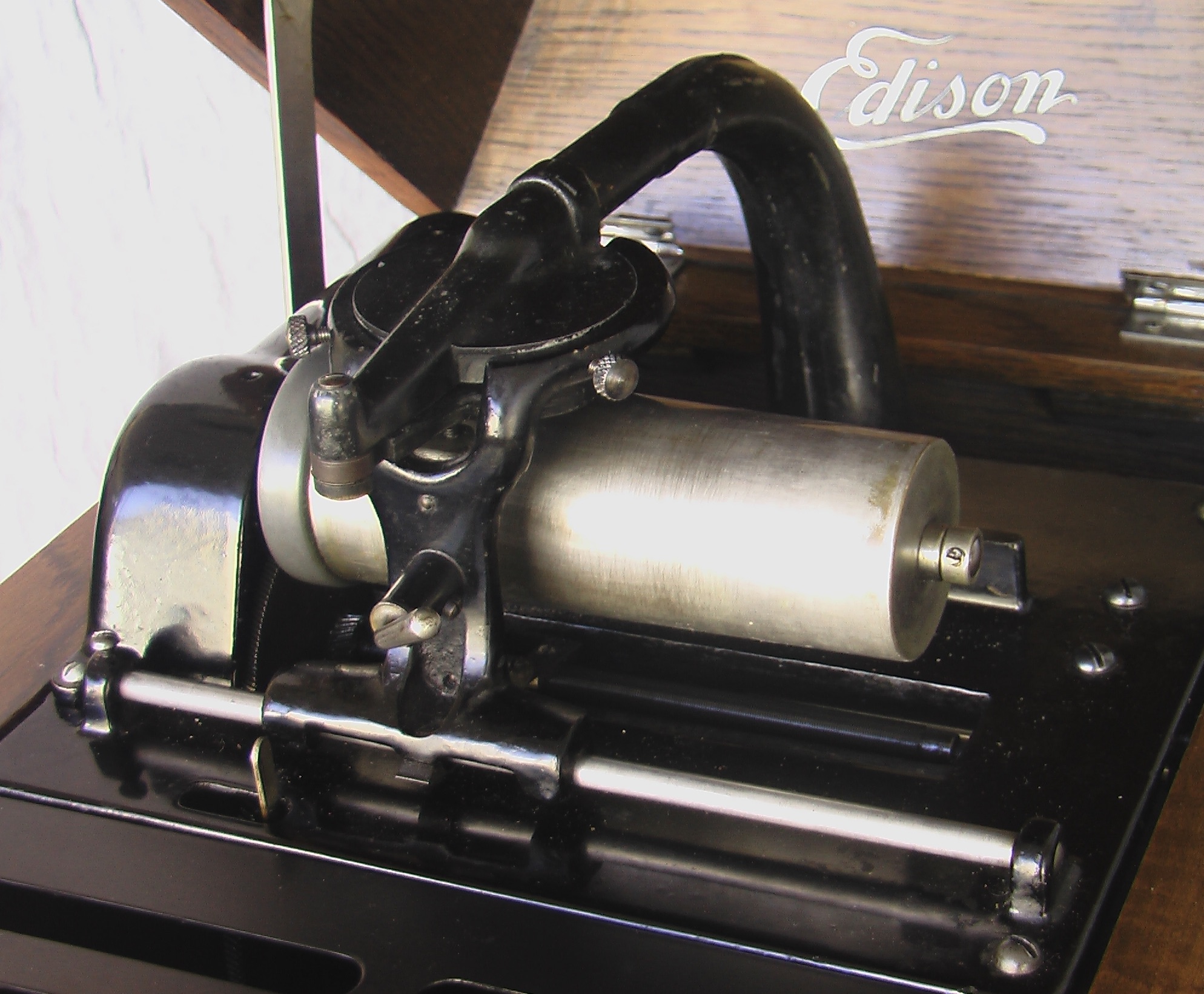
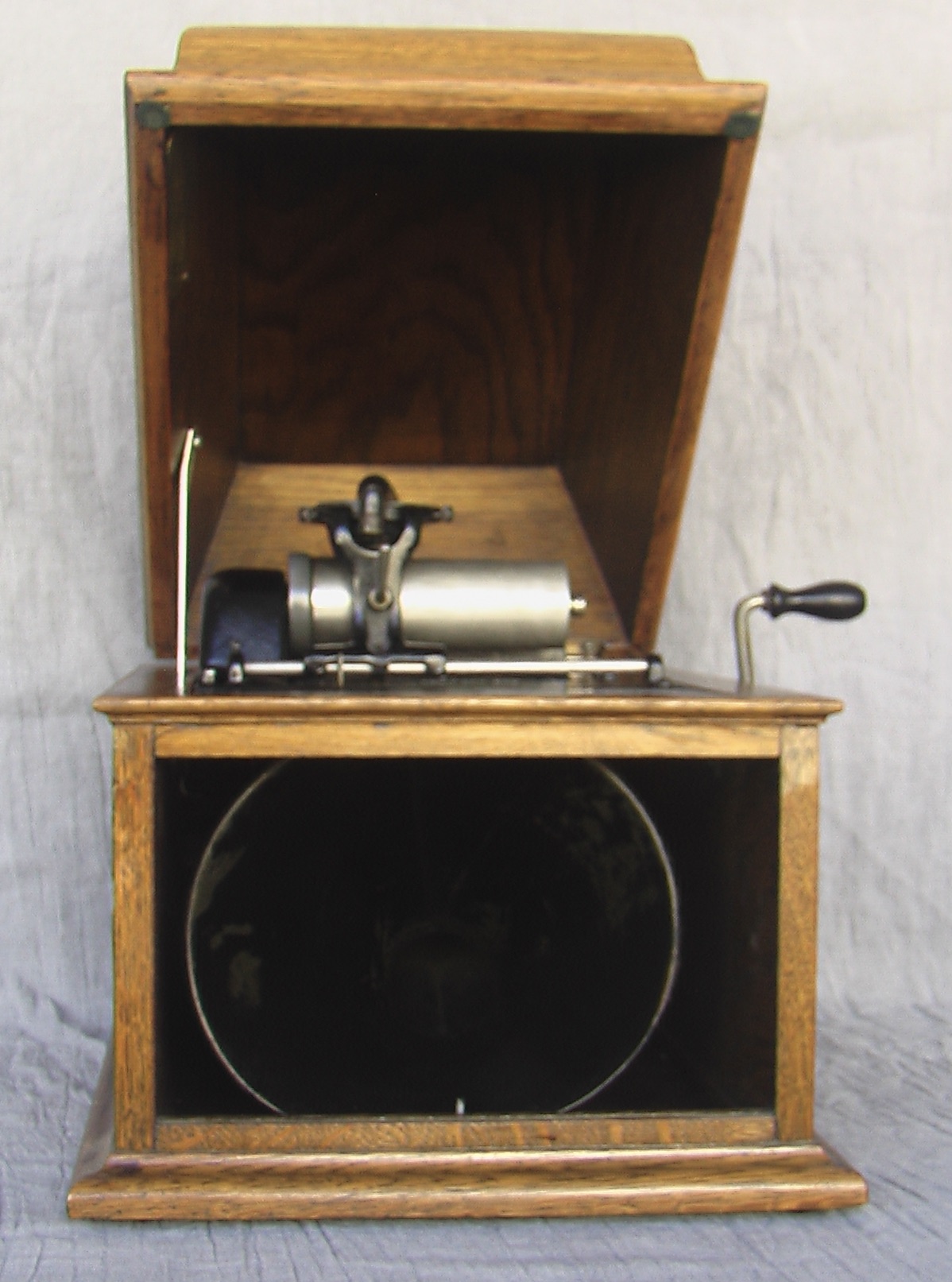
Unlike the Columbia Eagle cylinder machine found in the collection, most of the operational machinery of Edison cylinder players, including the Amberola 30, is located in its box-shaped case, out of sight on the bottom side of the case’s top metal plate. Only the phonograph’s mandrel, its drive screw, its reproducer and carriage and guides, and part of its motor’s belt are visible when in operation (detail #2). Beneath the top plate is to be found the spring motor, the governor, most of its gearing, the other half of the drive belt that transmits the power produced by the motor to the mandrel on the top side of the phonograph’s case, and its internal horn (detail #3, taken with the instrument’s front grill removed, shows the terminal end of the horn). The single spring motor, which when fully wound up can play three 4-minute cylinders, is prepped by turning clockwise the removeable hand crank that protrudes from one side of the phonograph’s case (gallery #1). The lid of the case is hinged at the top of the case’s back wallboard and can be propped open with the aid of a metal support. The carriage that houses the phonograph’s diamond-tipped Model C reproducer/stylus moves along the length of a 4-minute cylinder mounted on the mandrel at a controlled pace of 200 phonogram grooves per inch as the mandrel rotates at a standardized speed of 160 revolutions per minute. All this precision is controlled by: a) the governor, which regulates the energy output of the spring motor; and 2) gearing and the drive belt, which collectively coordinate the rate of rotation of the phonograph’s mandrel and the drive screw that controls the rate at which the reproducer carriage moves laterally along the length of the cylinder. The small end of the instrument’s non-removeable horn is permanently connected to the back side of the reproducer and takes a U-bend a few inches behind the reproducer; the bulk of the horn is located inside the phonograph’s case with its terminal opening facing outward through the front, grill-covered, face of the case. When not is use or after a cylinder has started to be played, the hinged cover to the wooden casing can be lowered (gallery #2).
Player - Instrument Interface and Sound Production
The player takes a 4-minute cylinder and slides it onto the phonograph’s mandrel while the sound box carriage is at its raised position and so that the starting point of the phonogram’s groove is situated near the phonograph’s drive belt. The player then uses the motor’s crank to fully wind up the enclosed spring while the machine’s on-off switch is in the ‘off’ position. When ready to play the chosen phonogram, the operator slides the main switch to the ‘on’ position and the governor, gearing, mandrel, and reproducer feed screw all start rotating. The operator then slides the soundbox carriage to over the left end of the cylinder and lowers the soundbox until one end of it contacts the drive screw and the stylus end comes in contact with the surface of the rotating cylinder. The reproducer carriage then starts to move along the length of the cylinder at a consistent pace (covering 200 passes through the groove spiral per inch of cylinder while rotating at 160 times per minute). When the performance captured on the cylinder comes to an end, the player lifts the stylus and stylus carriage off the cylinder, slides it all the way to the left, and turns the motor off before removing the cylinder from the mandrel.
Origins/History/Evolution
The cylinder phonograph was invented in 1877 by Thomas Edison. His machine was driven by a hand crank and used a cylinder made of tin foil. By 1915, when the Amberola 30 was first marketed by the Edison company, a number of technological advances had accrued both in the material science of cylinder phonograms and the mechanical design of phonographs to allow the nascent recording industry, and actors in it such as Edison, to produce marketable machines affordable to a large segment of the public. Edison stuck with cylinder phonographs longer than any other company (Columbia, in 1910, discontinued production of cylinders and cylinder machines in favor of discs and disc phonographs, and Victor had from its get-go around 1900 produced only disc phonographs). Between about 1911 and 1929, Edison was the only major company still producing cylinders and cylinder phonographs. Production of Edison Amberola phonographs ended in 1929 when the Edison Phonograph Co. went backrupt and the cylinder era of phonograph history came to a close.
Bibliographic Citations
Frow, George L. 1994. The Edison Cylinder Phonograph Companion. 1st American ed., newly rev. and enlarged. Woodland Hills, CA: Stationary X-Press.
Reiss, Eric L. 2003. The Compleat Talking Machine. 4th ed. Chandler, AZ: Sonoran Publishing, LLC.