Emerson Model 725 disc phonograph
Contextual Associations
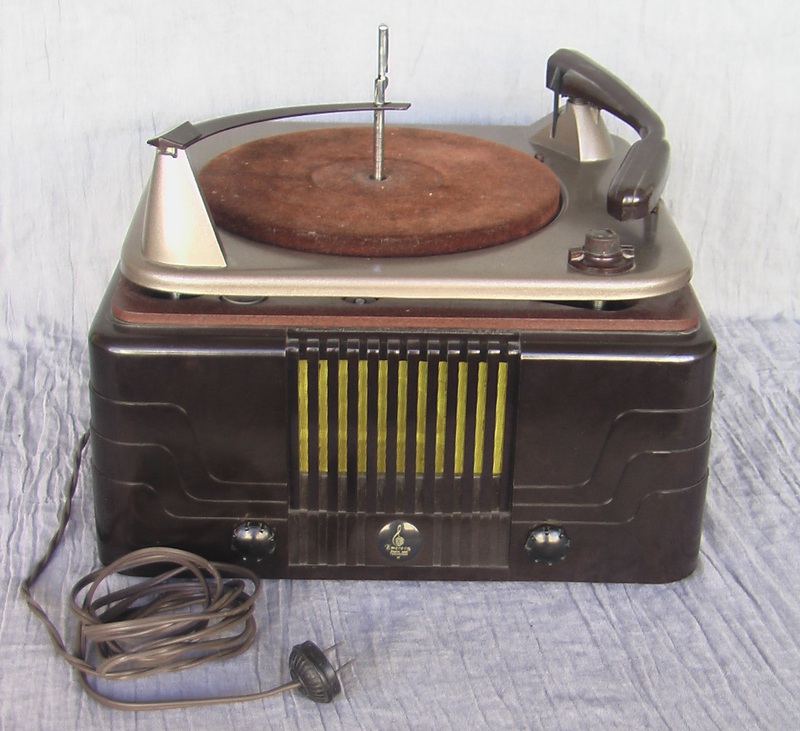
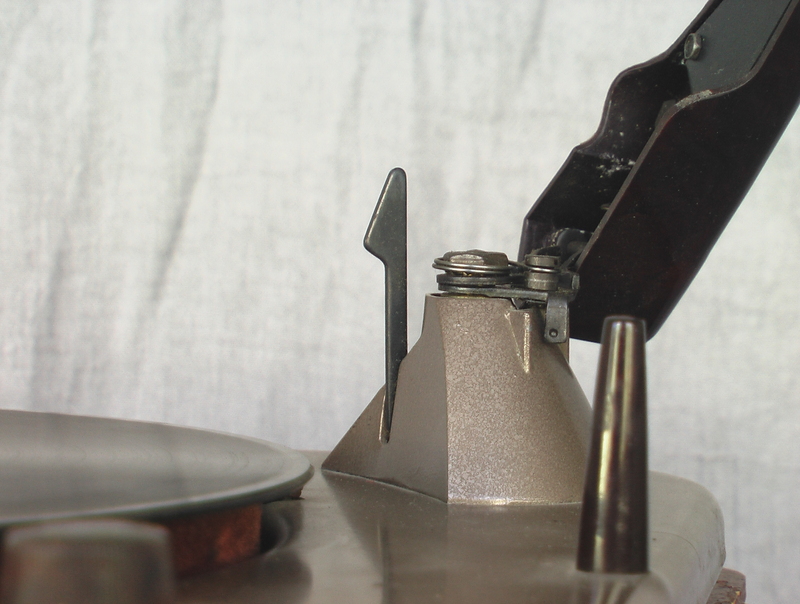
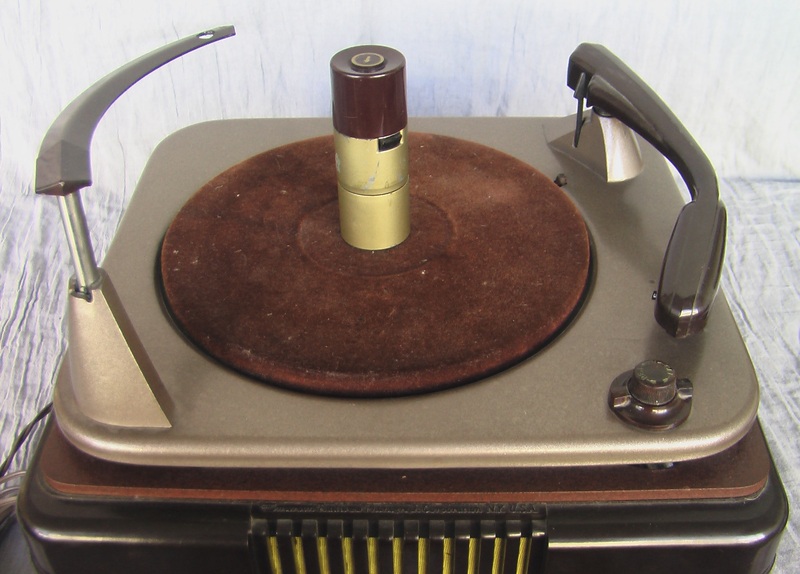
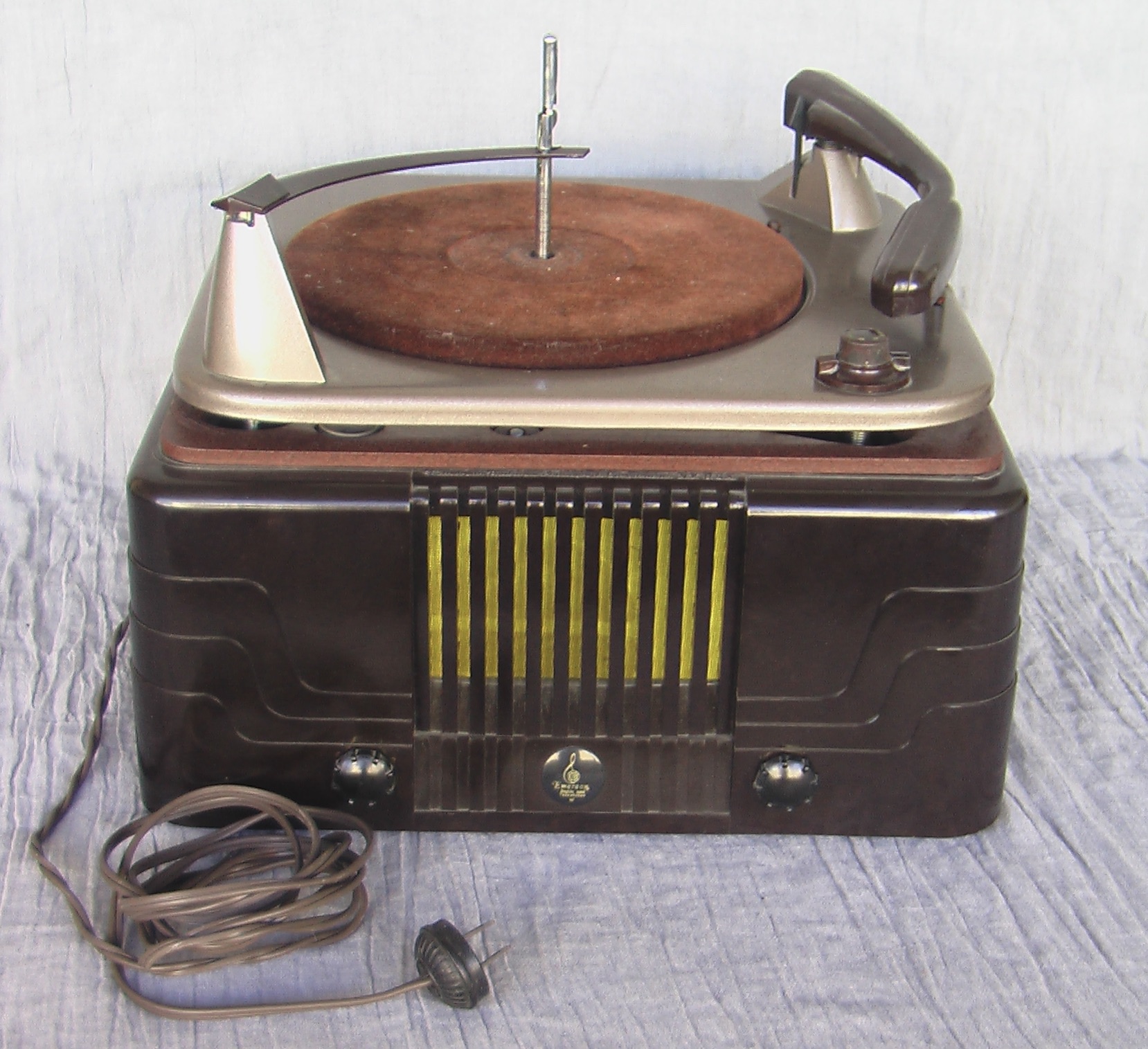
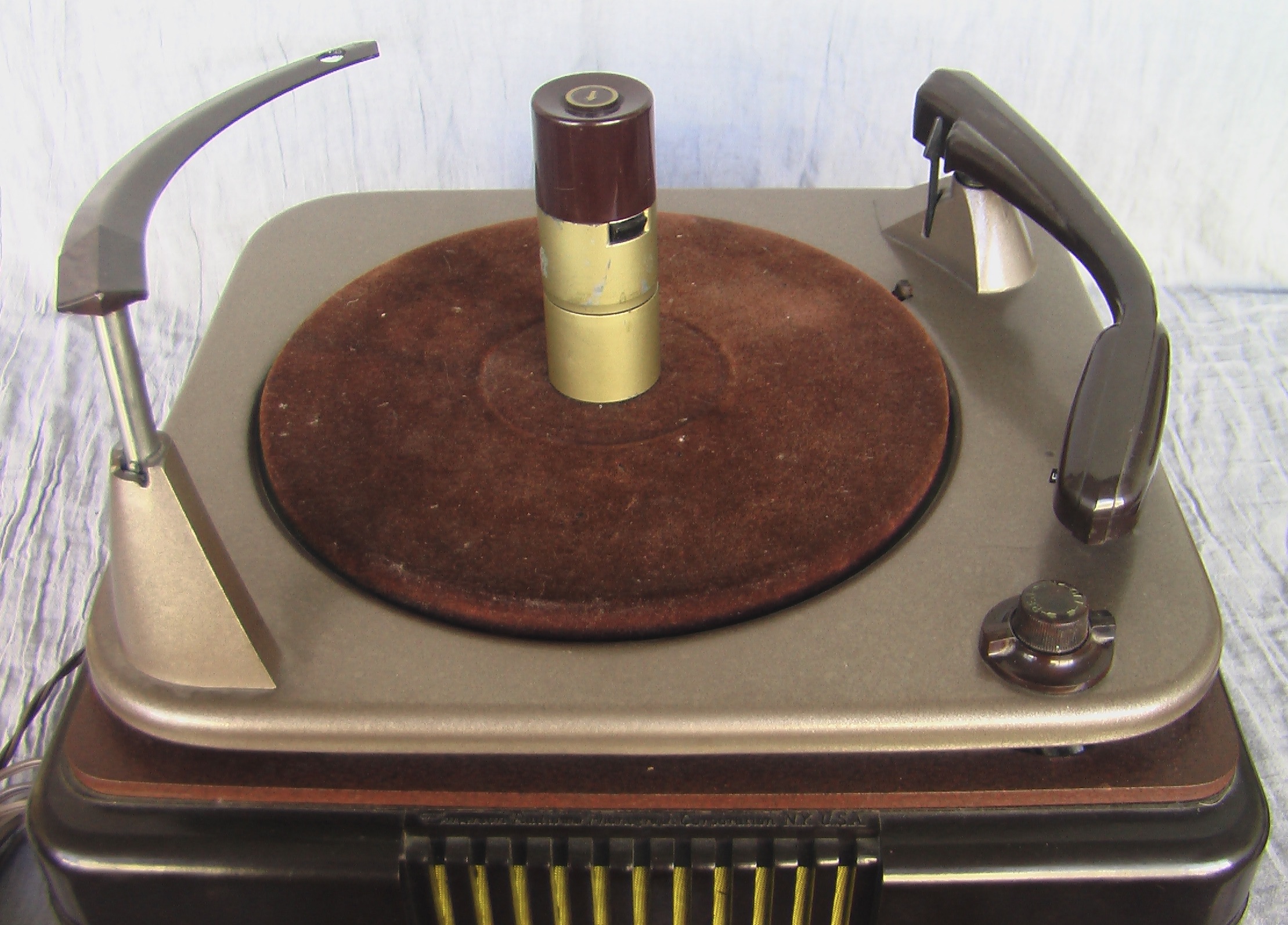
The Emerson Model 725 phonograph is an electro-acoustic idiophone stylusphone made in the U.S.A. in 1953. It is a monaural, multi-speed (78rpm, 45 rpm, and 33-1/3rpm) turntable that can play discs up to 12-inches in diameter. Its case is Deco-styled and made of Bakelite. It is intended for home use and depends on an electrical source delivered from a wall outlet. Further features include: minimal volume and tone-quality control; record-changing (ability to play sequentially several discs of the same format); and automatic shut-off when the end of a record is reached.
Description
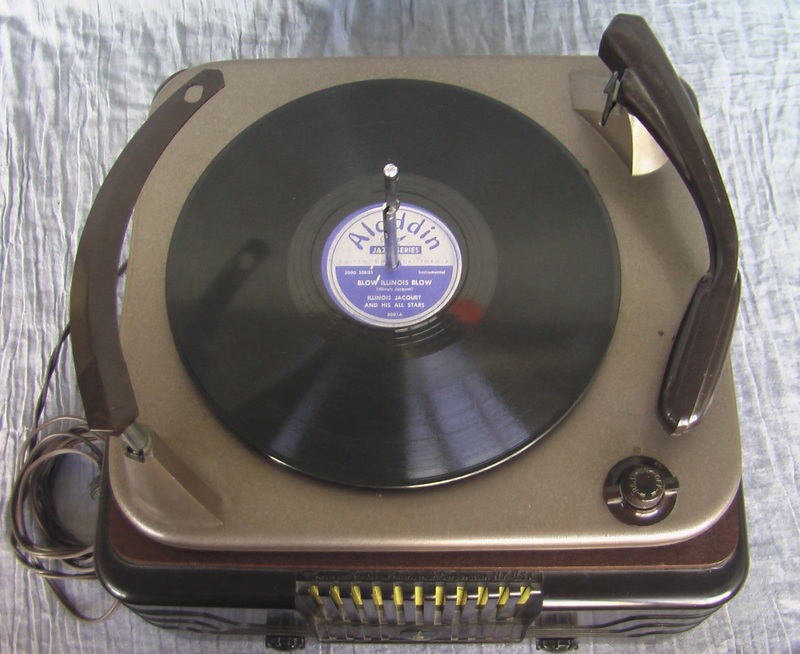
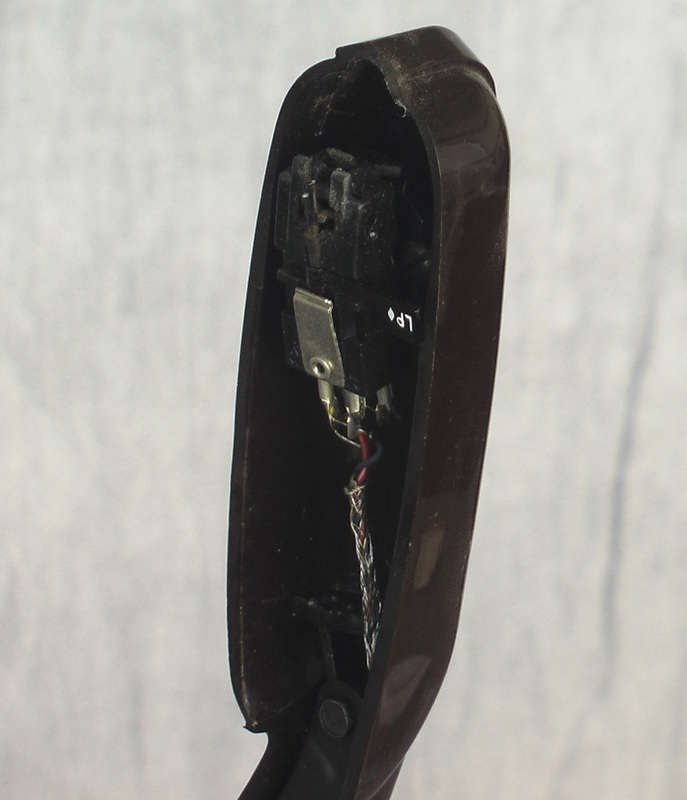
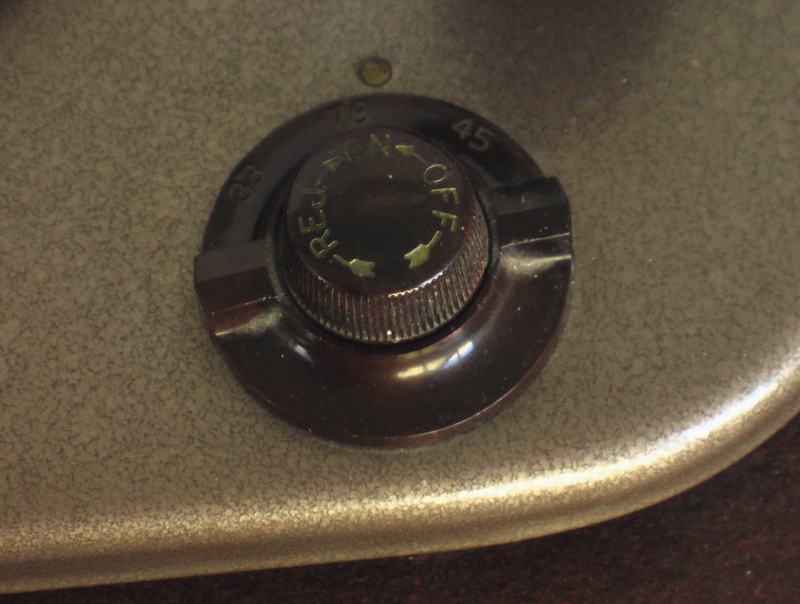
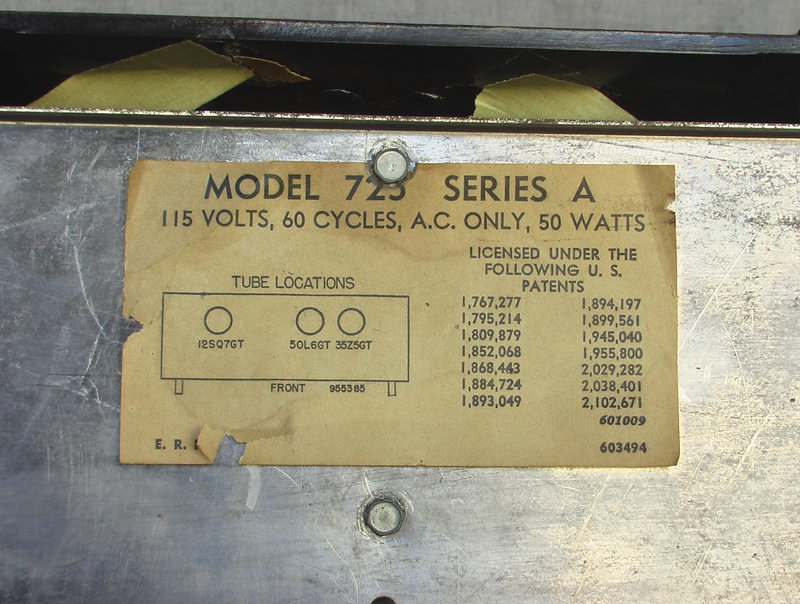
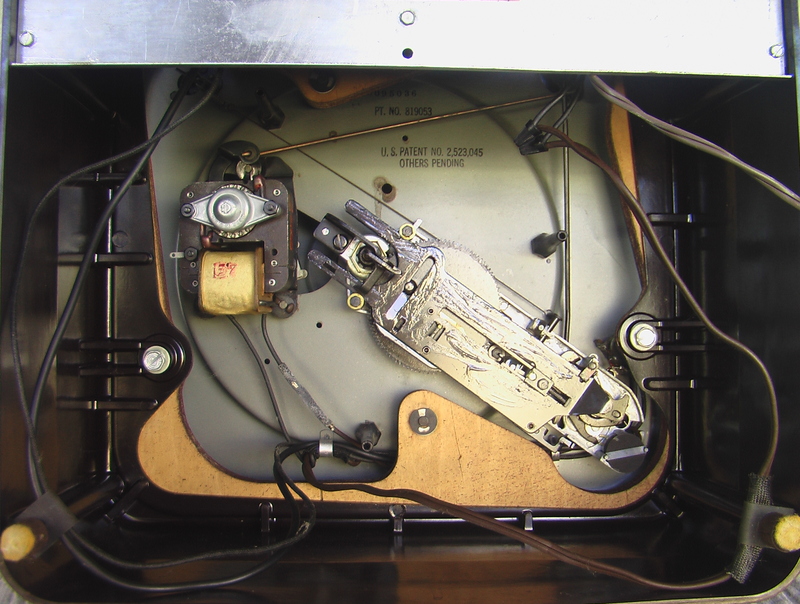
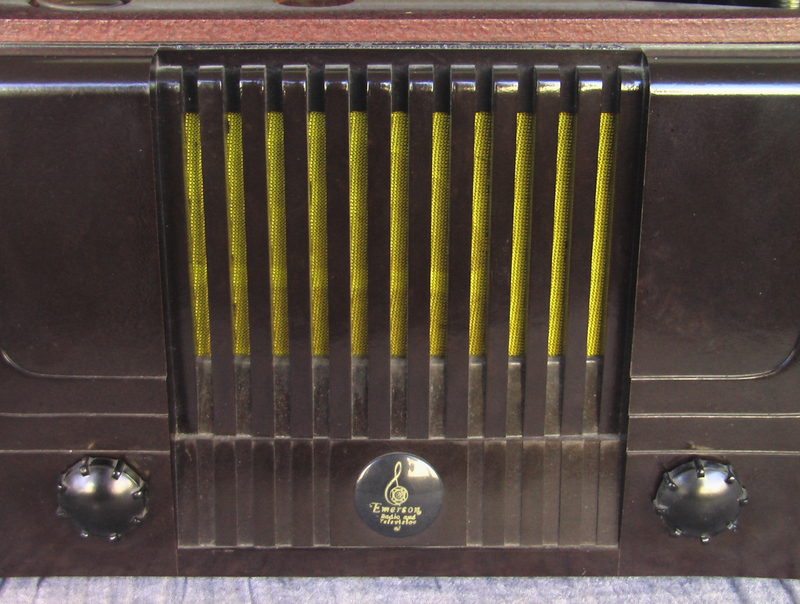
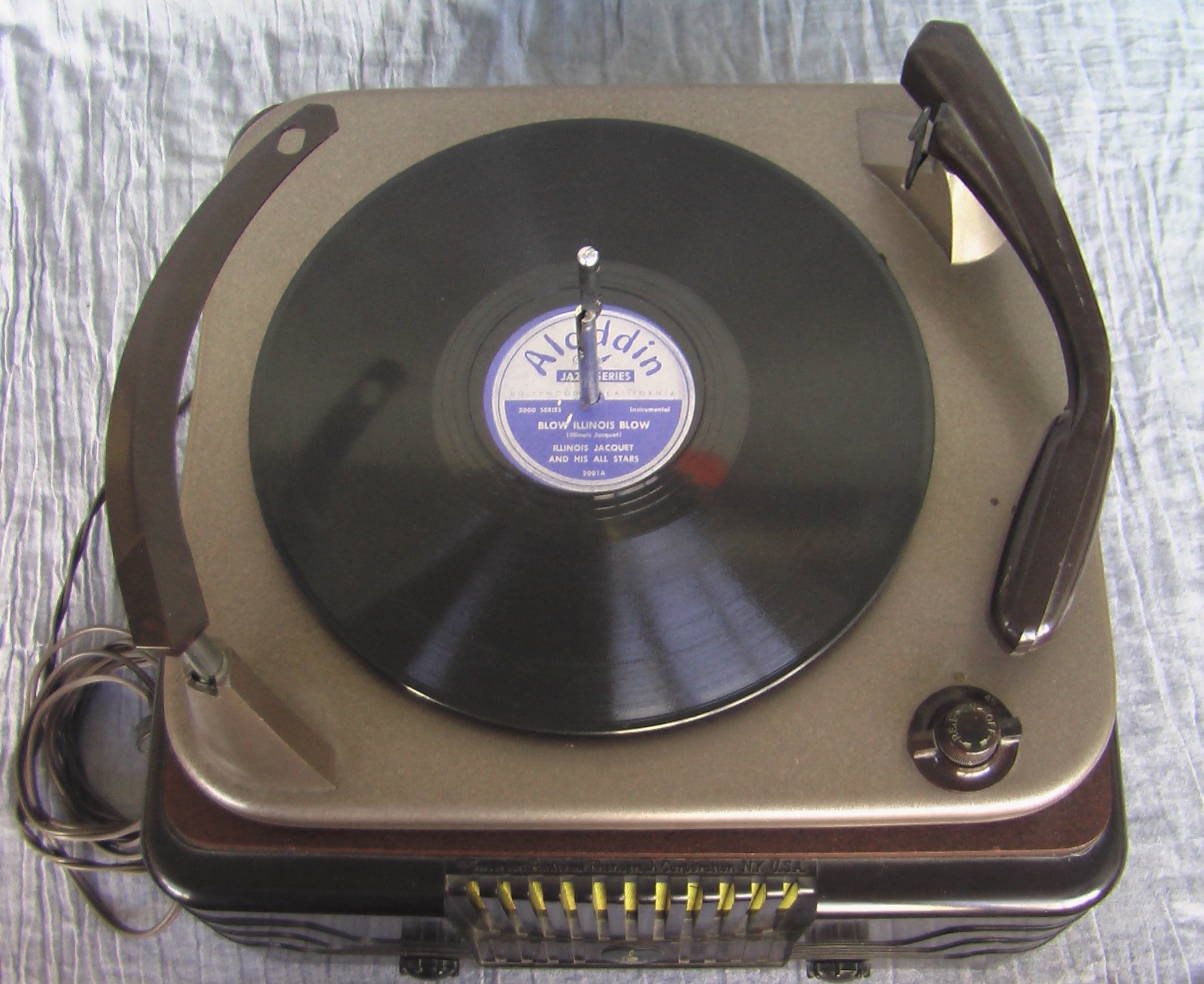
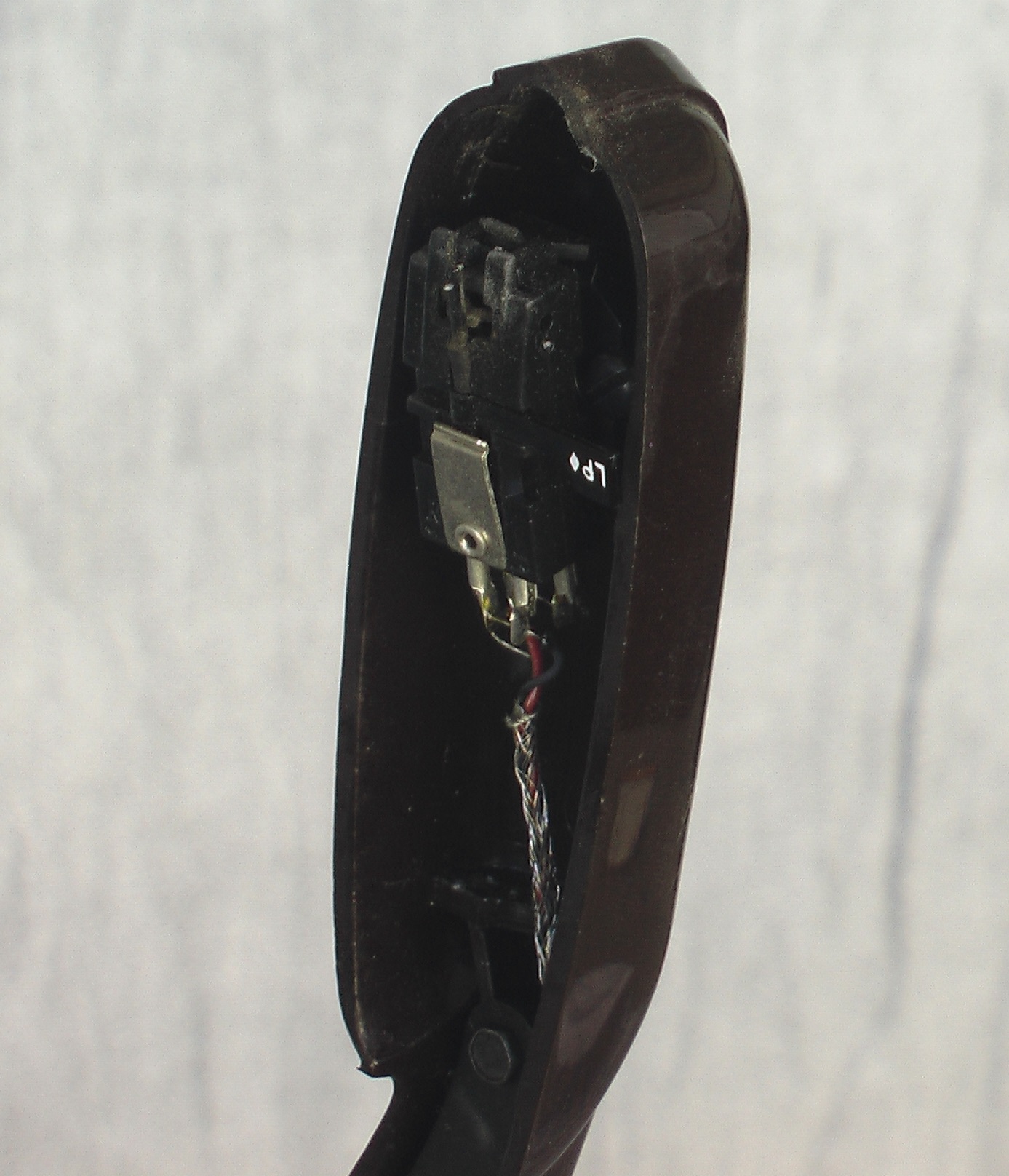
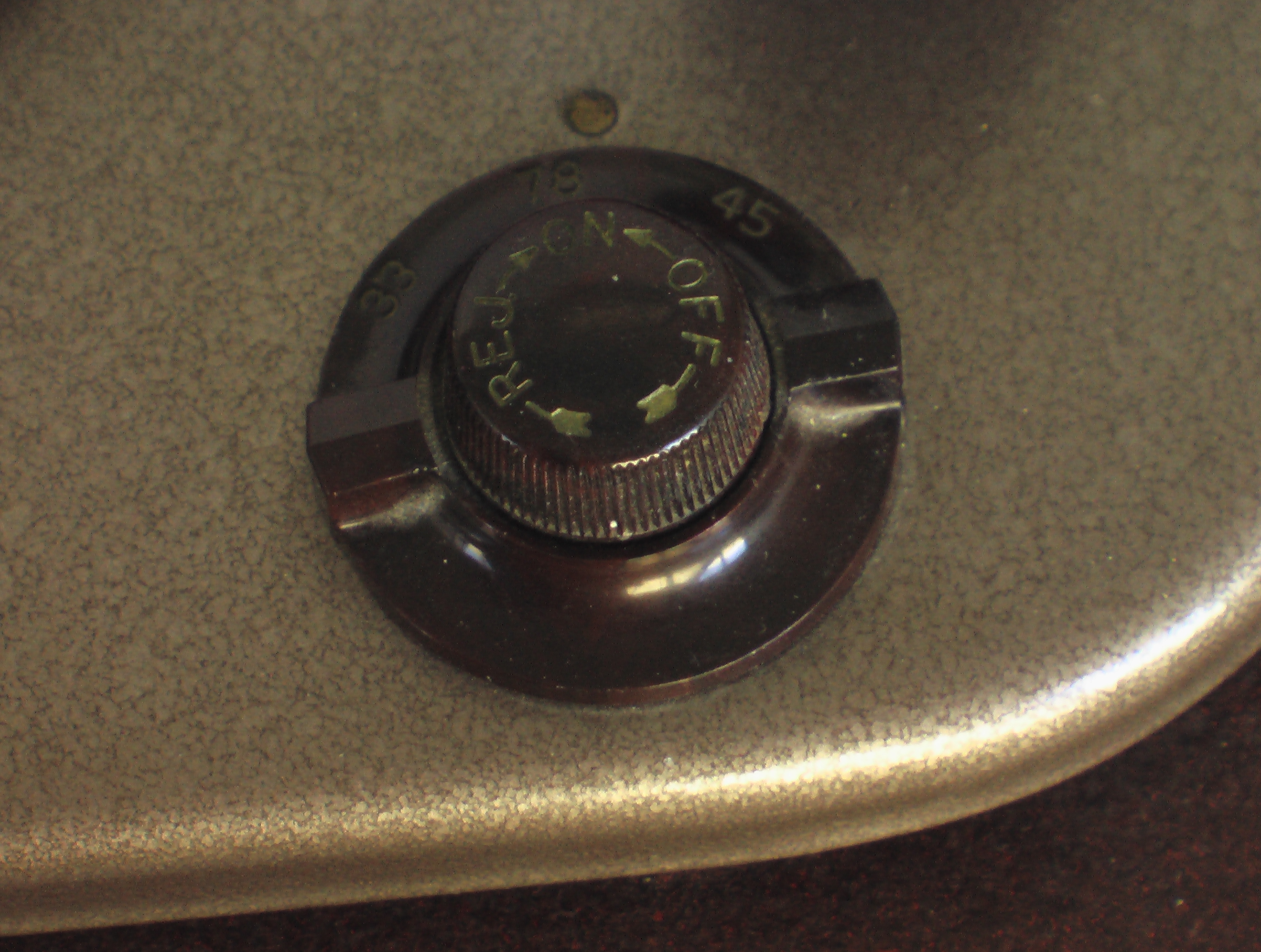
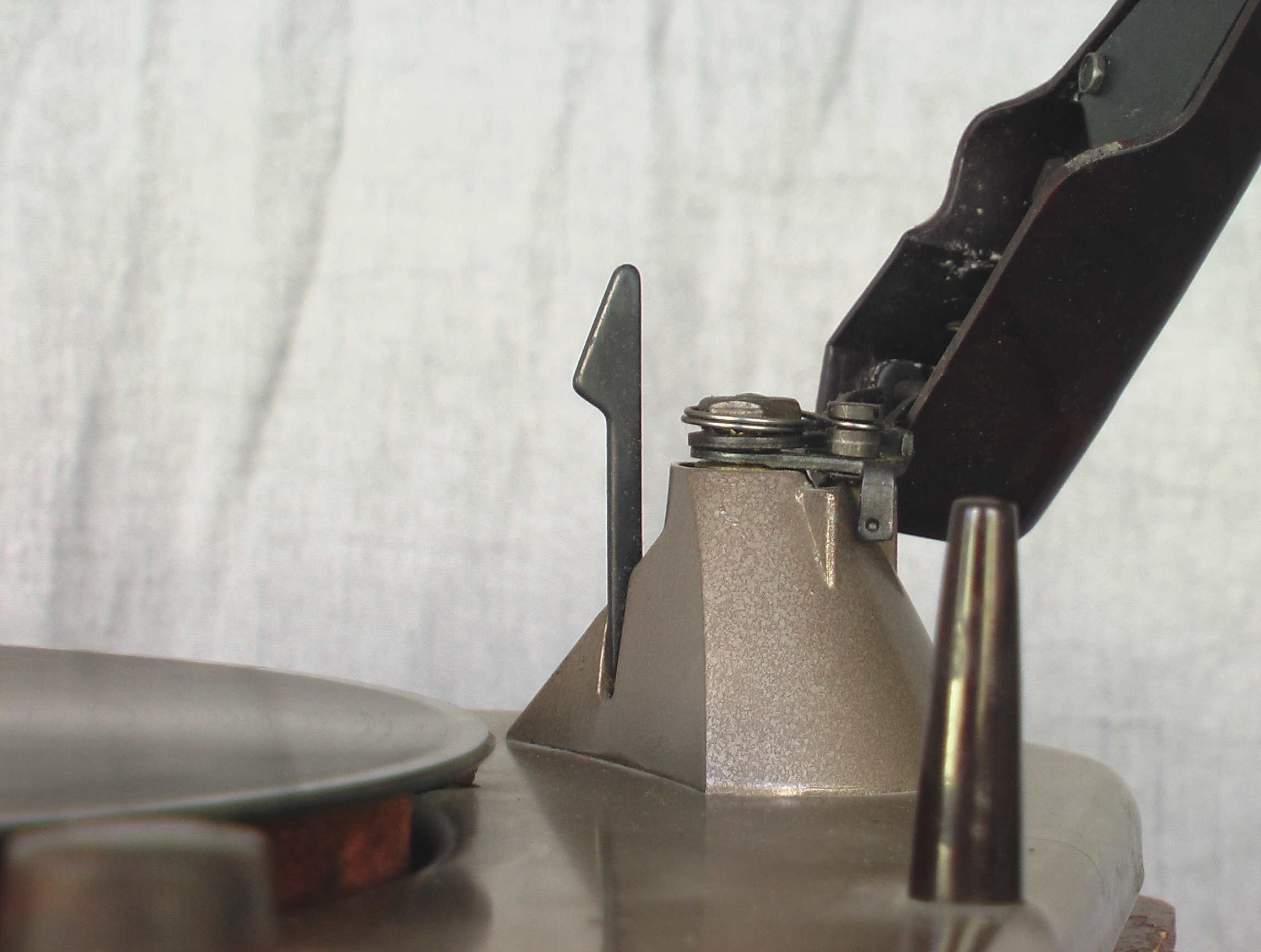
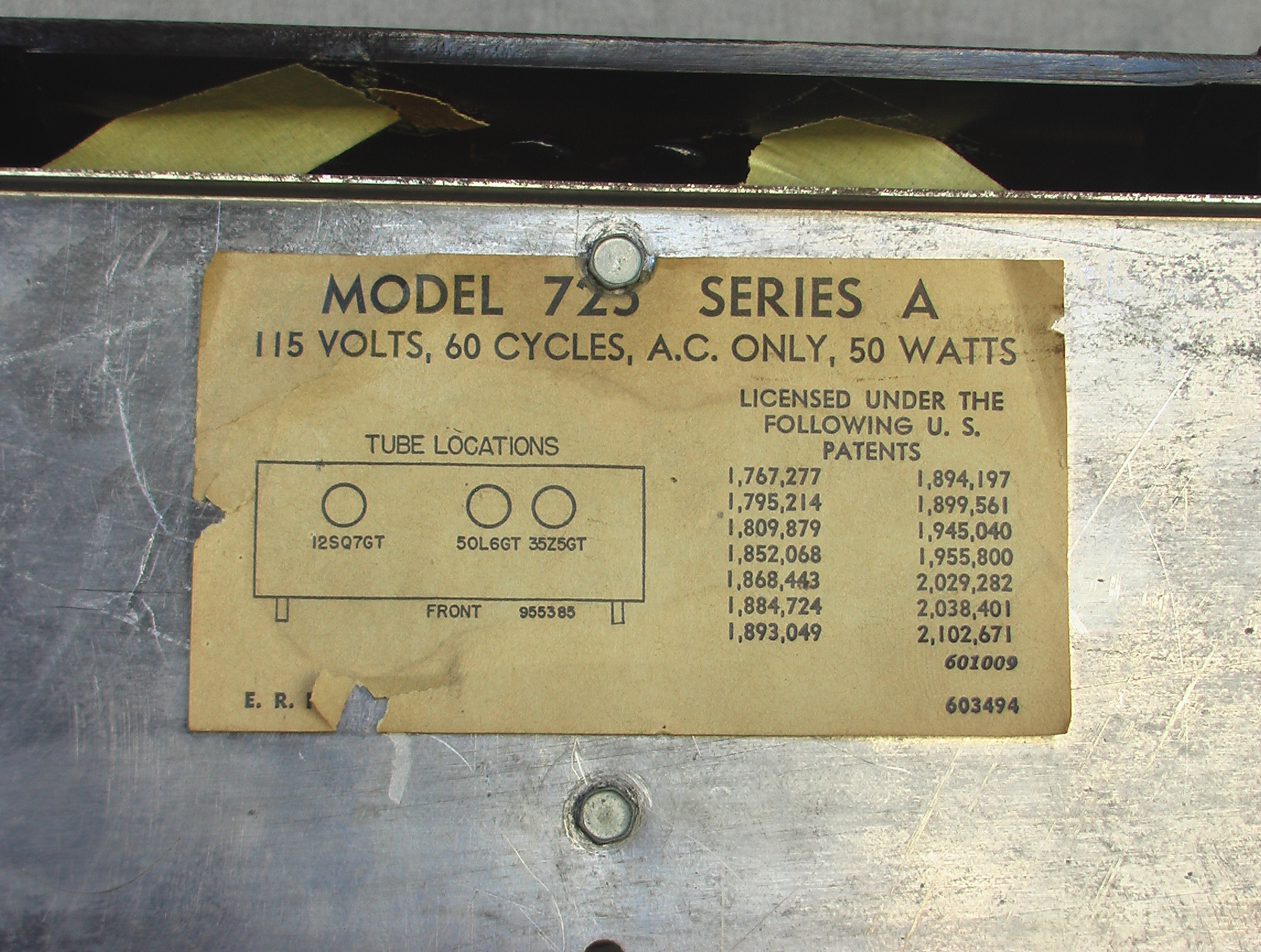
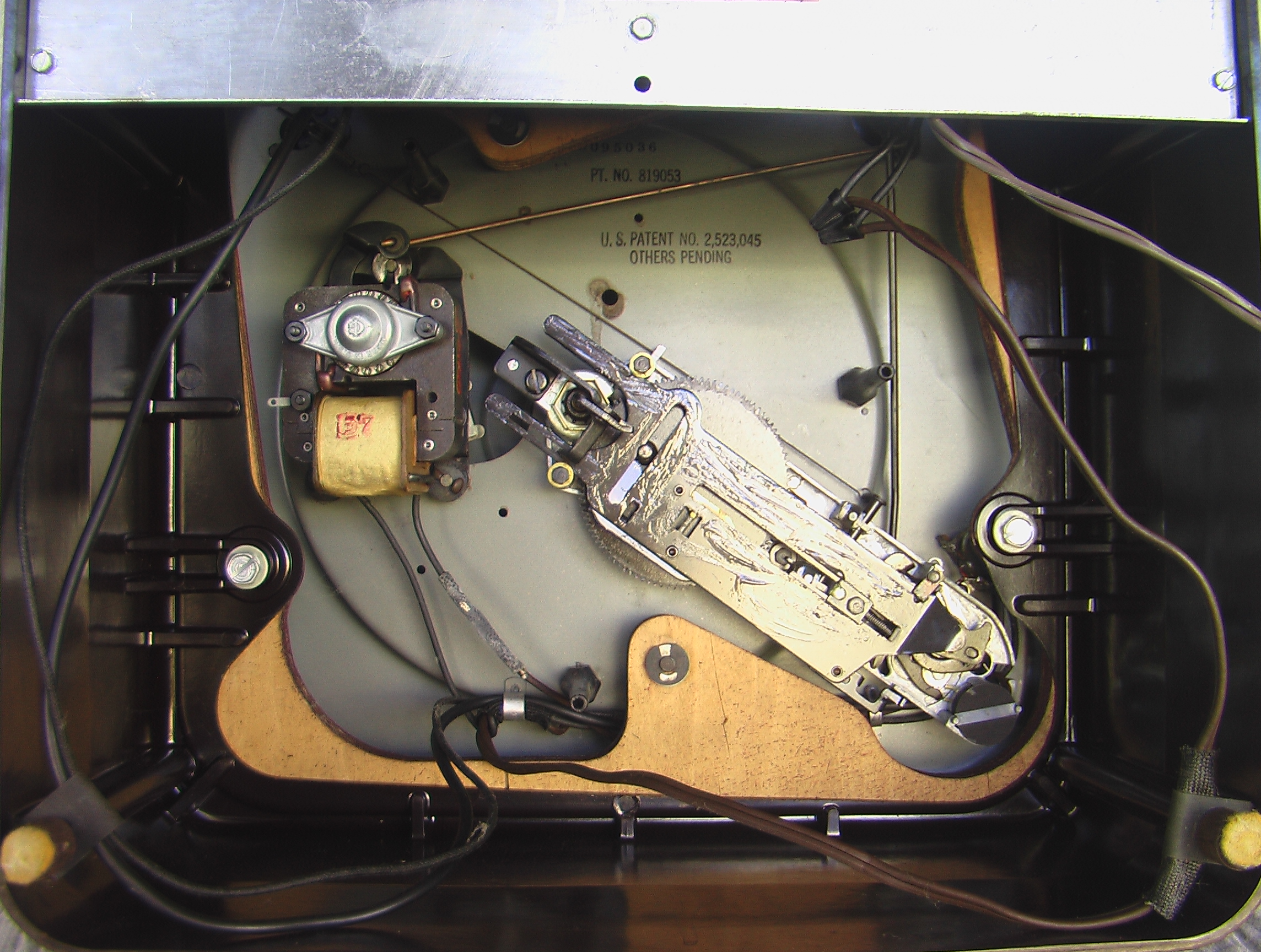
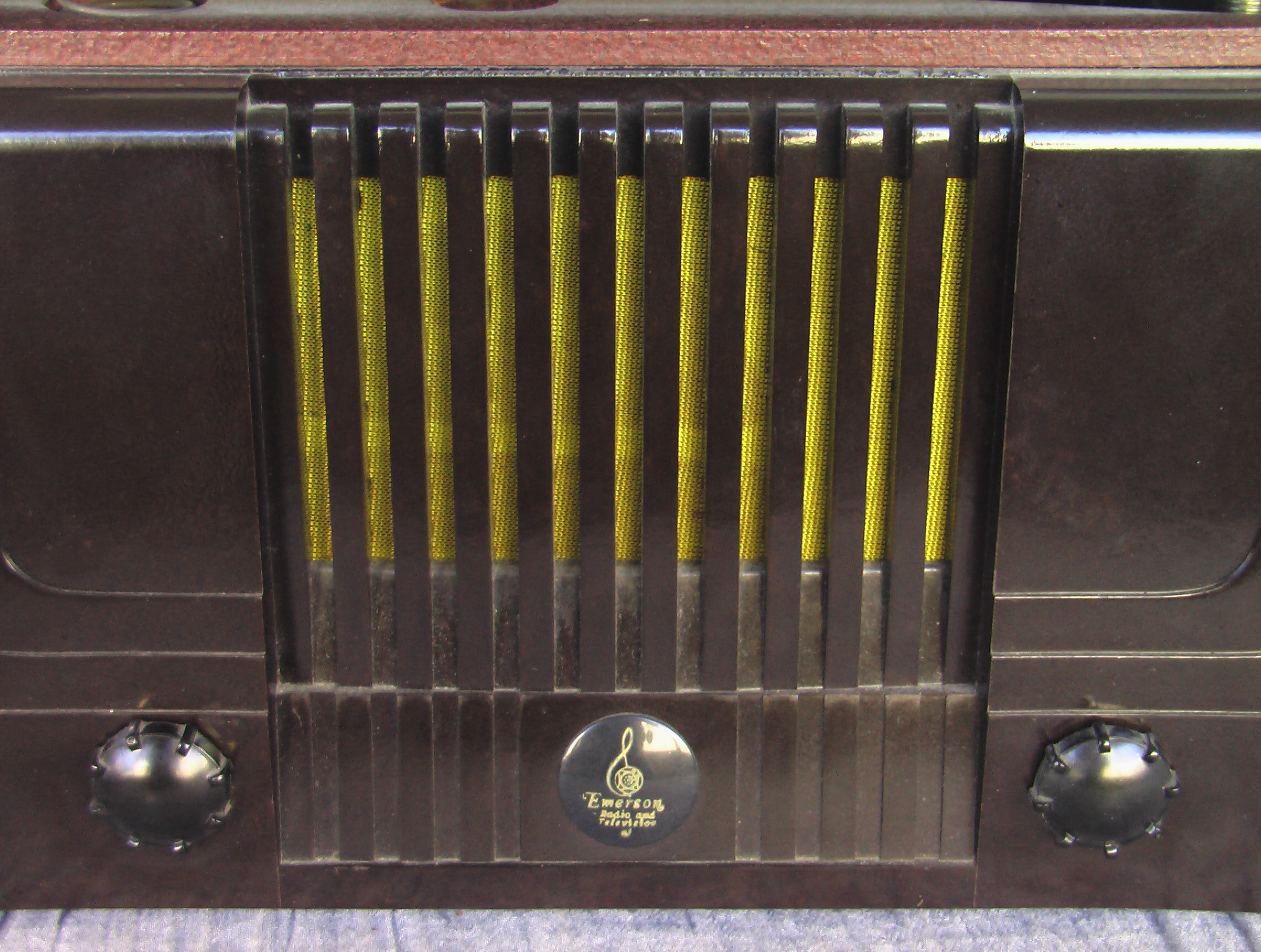
The Emerson Model 725 has, on its top face (detail #1): the tall, centrally located spindle (for playing 78rpm, 33-1/3 rpm, and small-hole 45rpm discs) at the middle of its turntable; its tone-arm (right side; at the end of the tone-arm [detail #2] is located the transducer cartridge and two-sided stylus [one side for playing 78rpm discs, the other for micro-groove discs]); a dual switch in the lower-right corner ([detail #3] the outside one for rotation speed control, the inside one for starting and stopping play and stopping a phonogram that is being played), and the automatic changer-arm (left side). Also, a sensor for identifying when 12-inch discs are being played is found at the base of the tone-arm pedestal (detail #4). When playing large hole 45rpm discs a second, fatter, spindle is slipped over the main spindle (detail #5). From the open bottom of the phonograph case can be seen: a metal plate with a paper label (detail #6) identifying the model of the phonograph, various patents, and a schematic of the three vacuum tubes that are part of the phonograph’s amplifier (which is located on the other side of this plate); and (detail #7) a partial view of the bottom side of the upper/turntable face with some of its electronic and mechanical components visible. On the front face of the phonograph’s casing (detail #8) can be seen: its speaker grill (center); its on-off/volume knob (bottom left); its two-position tone control knob (bottom right); and the Emerson company logo (bottom center).
Player - Instrument Interface and Sound Production
The operator starts by turning on the amplifier with the on-off/volume control switch on the front face of the casing and giving it about half a minute for its vacuum tubes to warm up. Since a few different disc styles can be played on the Emerson 725, the operator needs to make some adjustments before playing it. First, the proper spindle must be in place: the tall, slender spindle will be used for all disc formats with a small central hole; the fatter, removable spindle needs to be placed over the narrow one if big hole 45rpm discs are to be played. Second, the correct stylus needs to be switched into place; one for playing 78rpm discs, the other for all micro-groove discs. Third, whether a single disc or a number of discs of the same format (size, speed, center hole size) are to be played, after loading them onto the top half of the correct spindle the automatic changer-arm must be swung around to position the hole at its end over the spindle and then lowered. Fourth, the outside ring of the phonograph’s dual switch (detail #3) must then be set at the correct speed for the discs that are to be played. Finally, to start playing the upward-facing sides of the loaded discs sequentially, the inner knob of the dual switch (detail #3) must be rotated to ‘REJ’ and let go of. The lowest record on the spindle will then drop to the turntable and the tone-arm will automatically move to over the start of its groove, drop down so that the stylus contacts the record, and start playing it. When the end of a record is reached, the tone-arm automatically moves to the right side of the turntable so that the next disc can drop and the sequence continues until all the discs originally stacked on the spindle have been played.
Origins/History/Evolution
Record companies started introducing electricity and, often, radios to their heretofore acoustic phonographs and recording processes in the early 1920s, and by the end of that decade and the onset of the economic austerity of the Great Depression in 1929, only a few record companies survived into the 1930s and beyond (Edison didn’t, but Victor [after being bought out by R.C.A.], Columbia, and a few other manufacturers [including the Emerson company, which made the Model 725 discussed on this page] did. By the early 1950s when the Emerson Model 725 was made and marketed, all newly designed phonographs were electric and many of them could play both wide-groove (78rpm) and micro-groove (45rpm and 33-1/3rpm) discs. By the end of the 1950s most phonographs could play only micro-groove discs and (at least in the U.S.A. and much of Europe) no new 78rpm records were being made.
Instrument Information
Origins
Continent: Americas
Region: North America
Nation: U.S.A.
Formation: Euro-American
Classification (Sachs-Von Hornbostel revised by MIMO)
511.111.1
Design and Playing Features
Category: electrophone
Type of electrophone: electro-acoustic
Type of oscillator: vibrating stylus + transducer
Type of pickup: electromagnetic
Number of voices: polyphonic
Primary pitch controller: phonogram stylus
MIDI compatible: no
Signal processing devices: analogue
Dimensions
14.0 in. width
13.6 in. depth
12 in. height (of center spindle, including casing)
Primary Materials
metal
Bakelite
electronics
felt
Maker
Emerson
Model
1953, 725 Series A
Entry Author
Roger Vetter